LED Scoreboards
Match day, made massive.
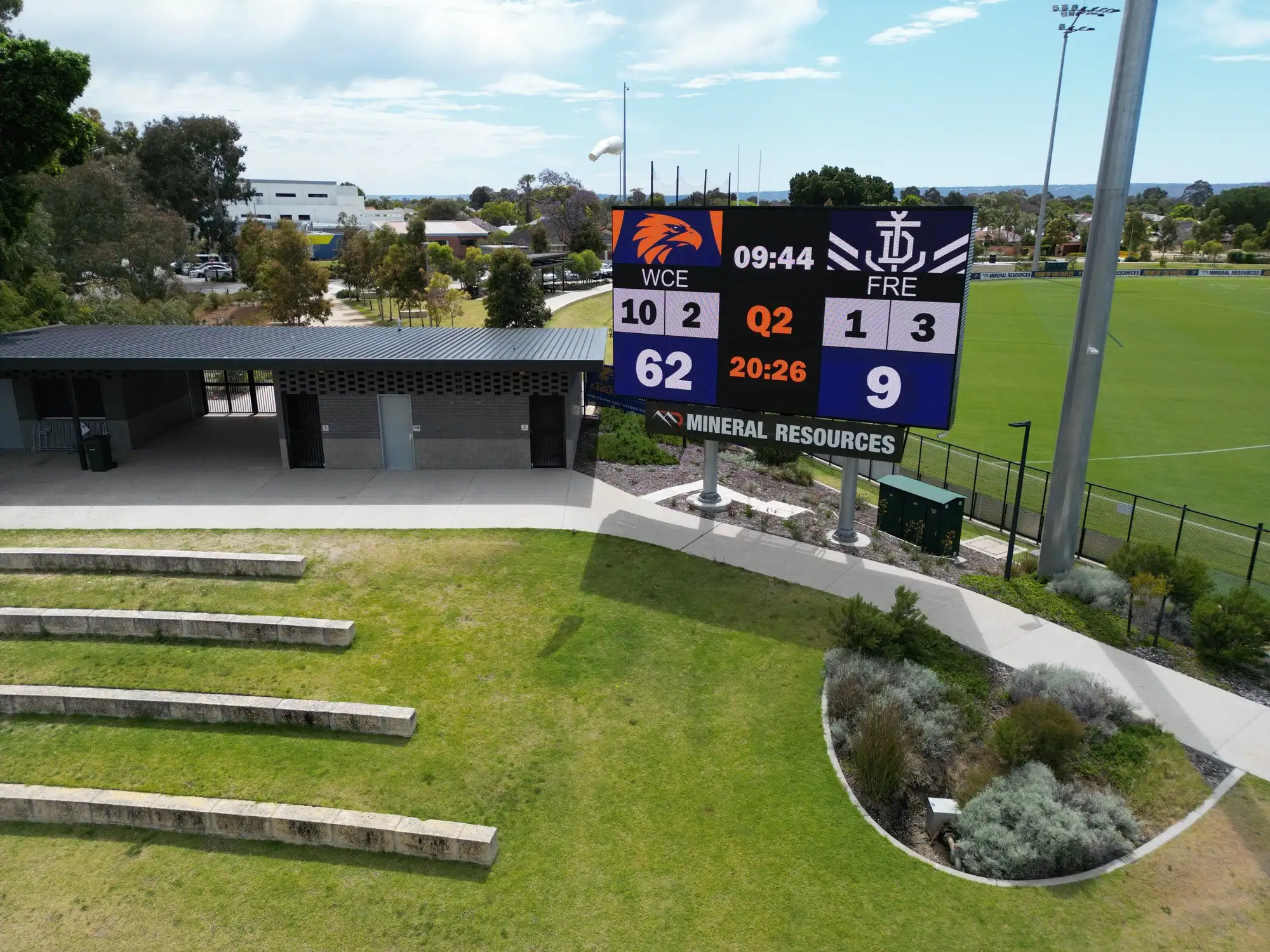
From community ovals to the West Coast Eagles, Focus AV designs and installs electronic LED scoreboards that lift the whole ground — scores, replays, sponsors and all.
What we actually deliver
A screen the whole club rallies around.
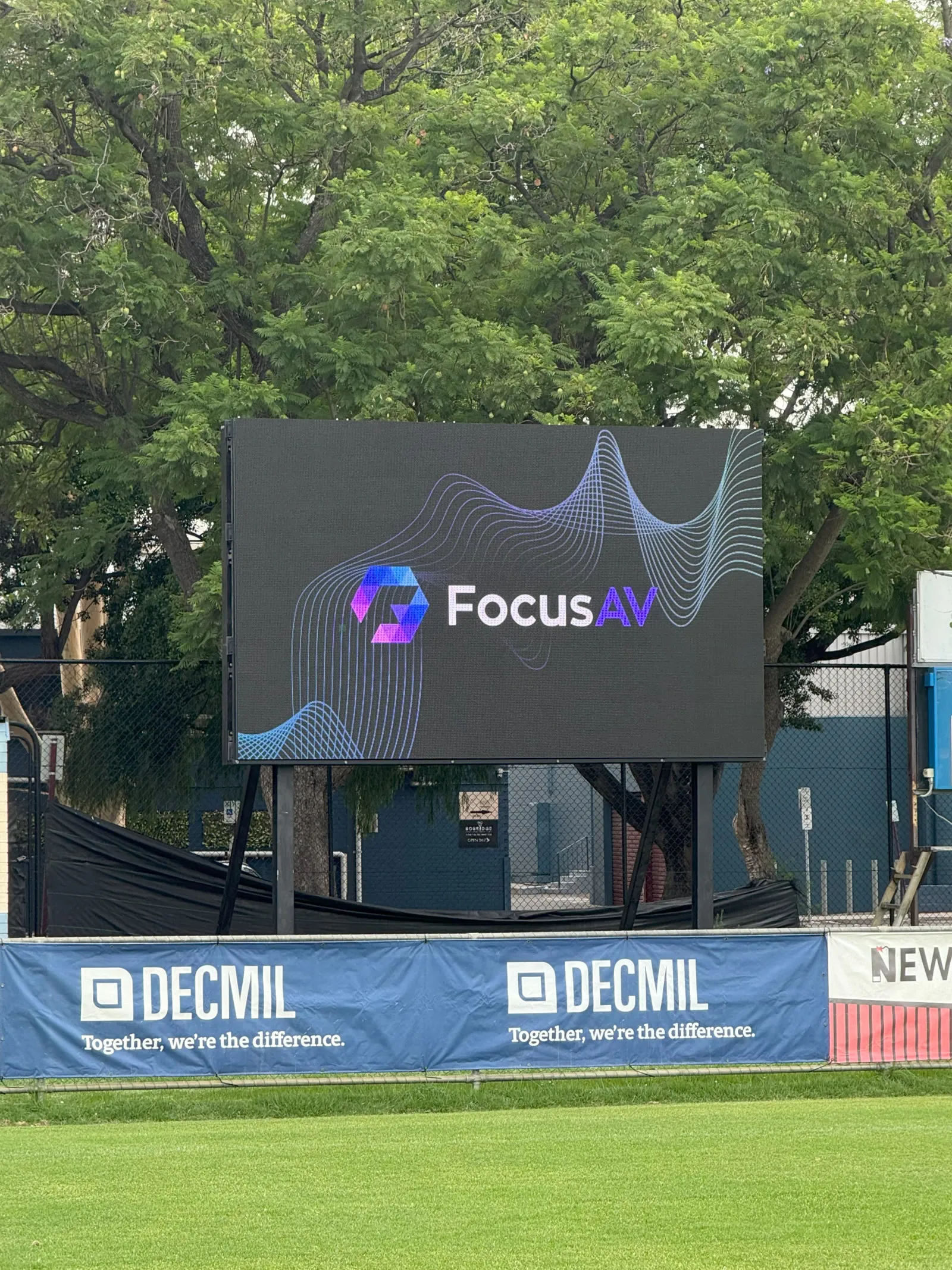
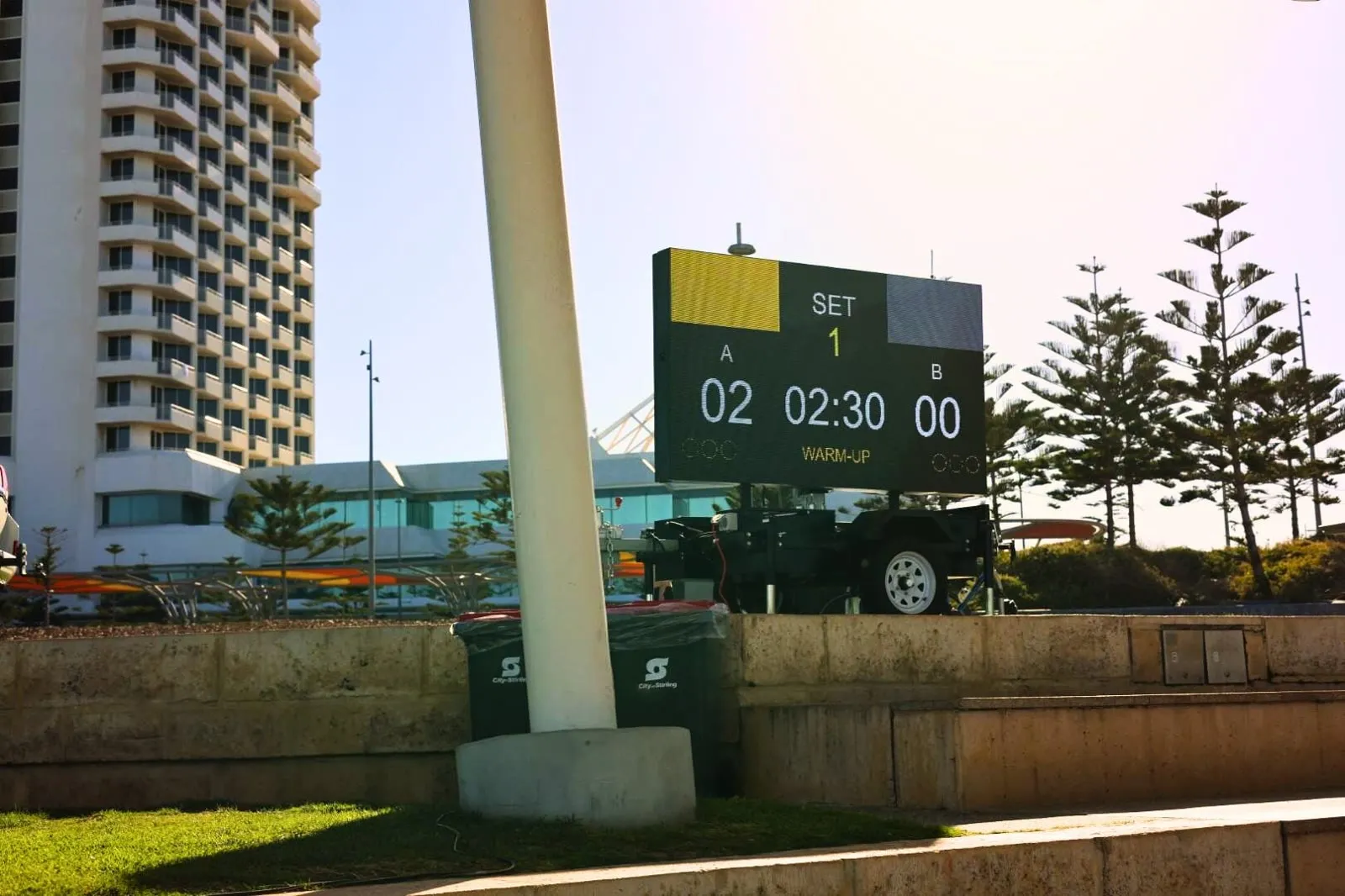
This is Perth Soccer Club's scoreboard the week Focus AV switched it on — an outdoor-rated LED screen on an engineered structure, bright enough to beat full WA sun, running scoring software a volunteer drives from a tablet.
A scoreboard project includes everything around the screen: the structural engineering and certified footings, power and data to the ground, the scoring software set up for your sports, sponsor content loaded and looping, and training for the people who'll run it on Saturday.
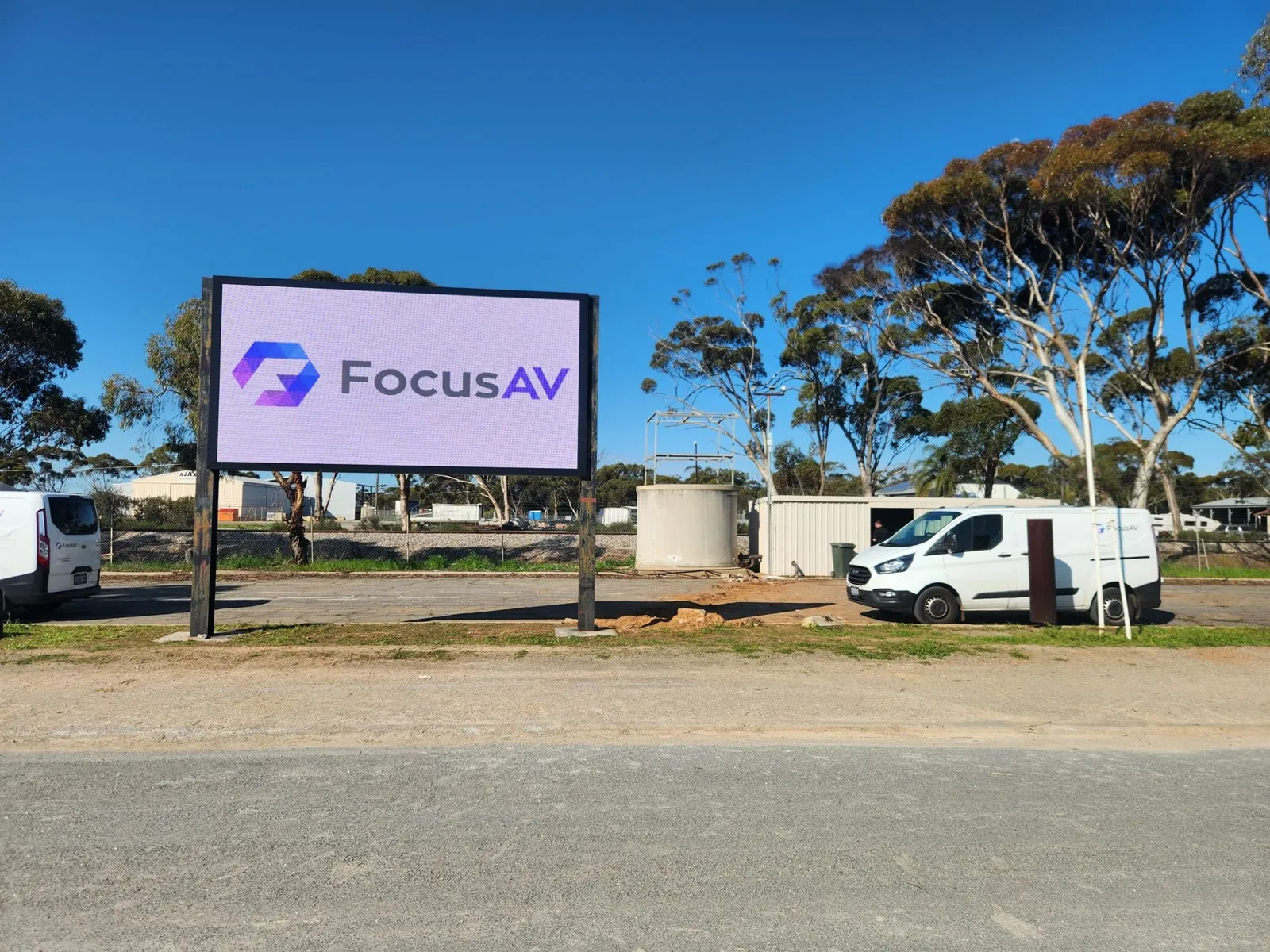
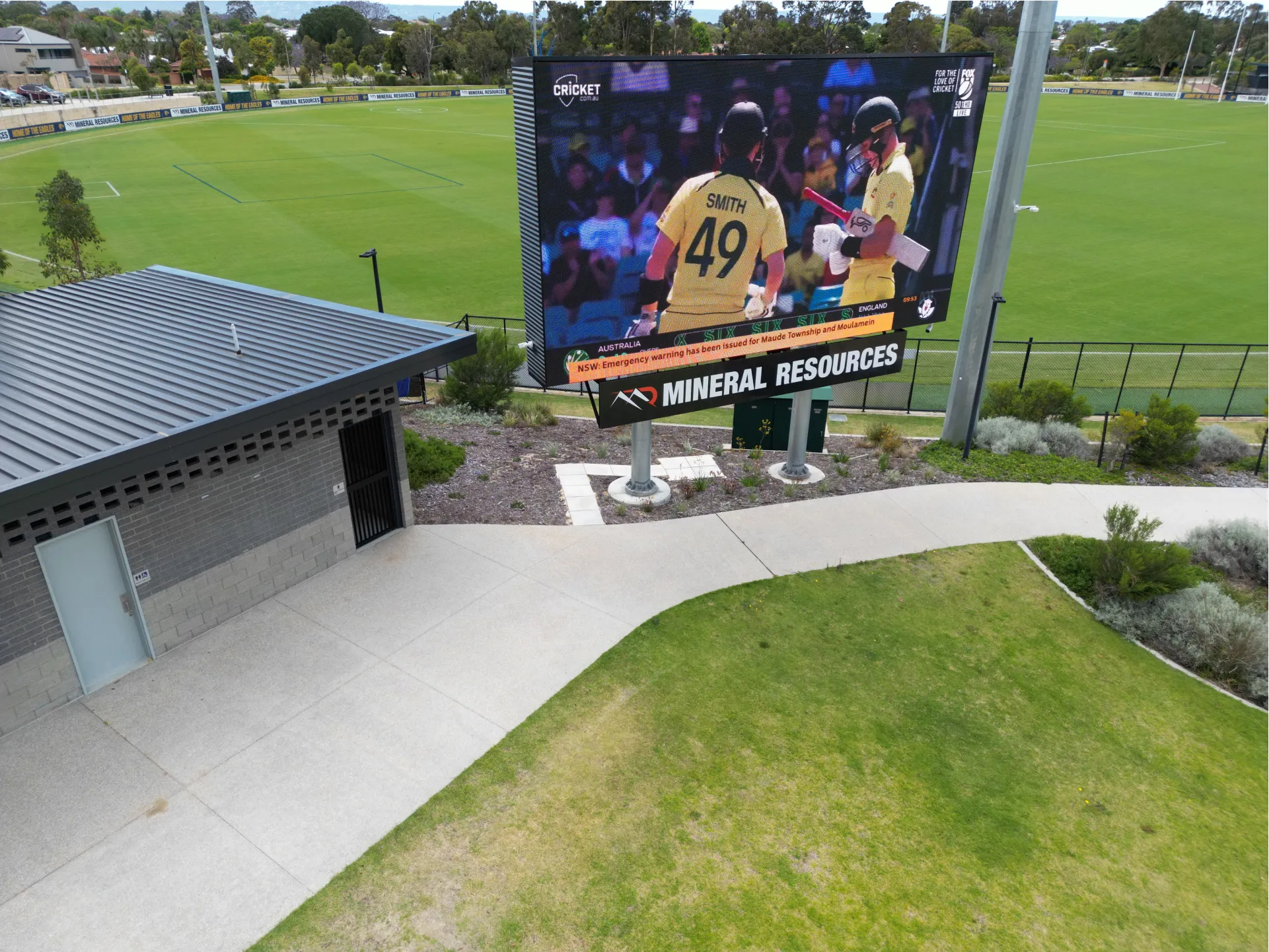
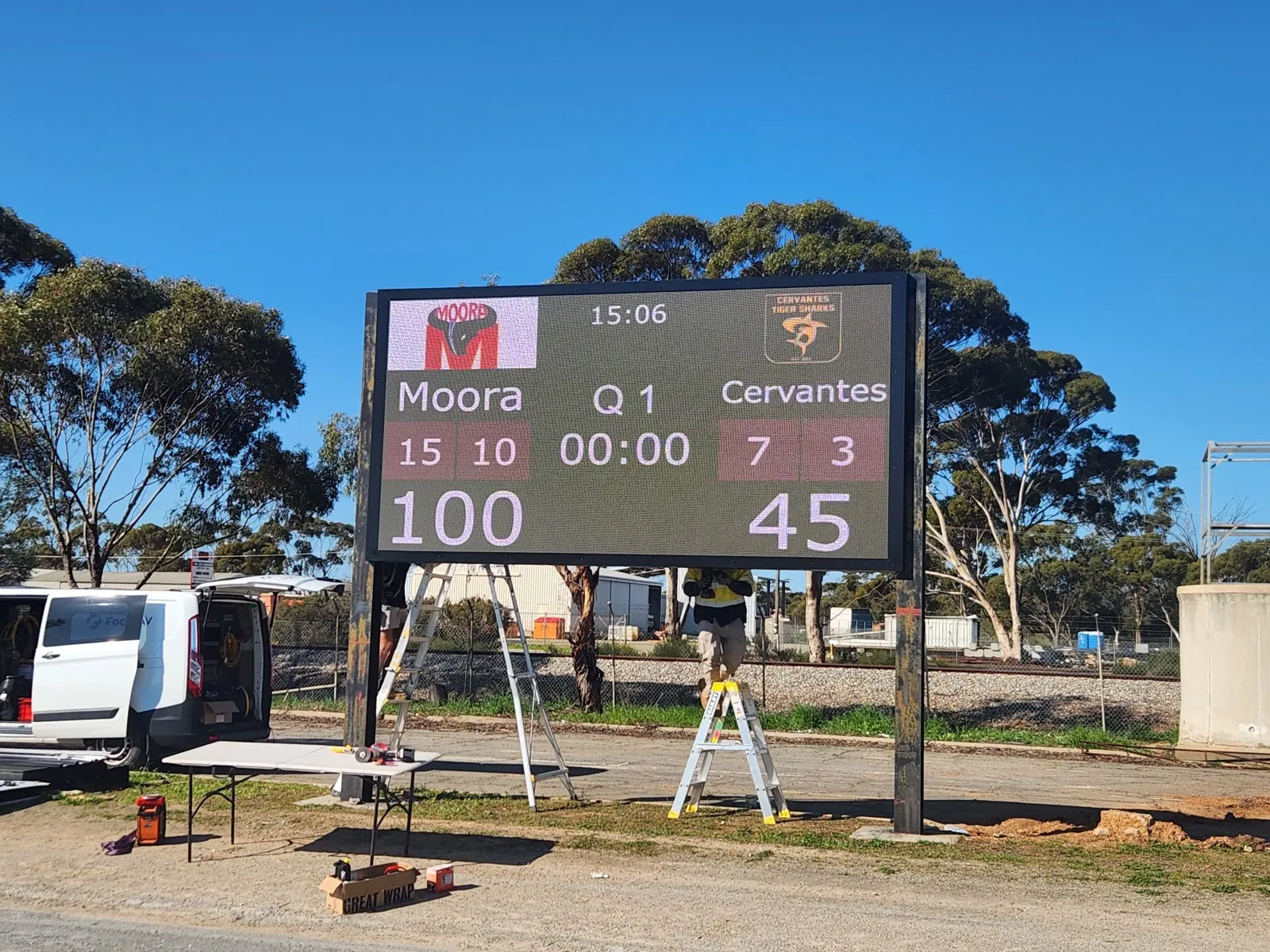
The same package scales from community ovals to elite facilities — Shire of Moora's community ground and the West Coast Eagles' training headquarters both run Focus AV boards.
Anatomy of a scoreboard project
The screen is the easy part.
Auto-cycles every two seconds. Tap a part to jump to it.
 The whole room
 More than a score
A scoreboard is a revenue machine.
A modern LED scoreboard does three jobs at once: it runs the game, it builds the atmosphere, and it sells. Clubs that upgrade discover the third job pays for the first two — sponsor loops before the bounce, big-screen replays that keep crowds longer, and naming rights on the structure itself.
Getting it right is an engineering job as much as an AV one: wind loading, footings, viewing distance and pixel pitch, sunlight brightness, and software simple enough for a volunteer to run on a Saturday morning.
Focus AV has delivered scoreboards for AFL clubs, soccer clubs, volleyball and regional shires — designed, certified, installed and supported by one WA team.
Fixed, mobile or digit board
Which scoreboard type fits your ground?
Most WA clubs choose between three options: a fixed LED scoreboard for a permanent home ground, a mobile trailer-mounted scoreboard that travels between venues, and a basic electronic digit board where the budget is tight. The right pick comes down to how the ground is used, who operates it on Saturday, and what the club can fund.
Fixed LED scoreboard
The permanent centrepiece: a full-colour video screen on an engineered structure, running scores, replays, sponsor loops and movie nights. Best for clubs with a home ground and a sponsorship plan — the screen earns income twelve months a year, not just on match day.
Mobile scoreboard
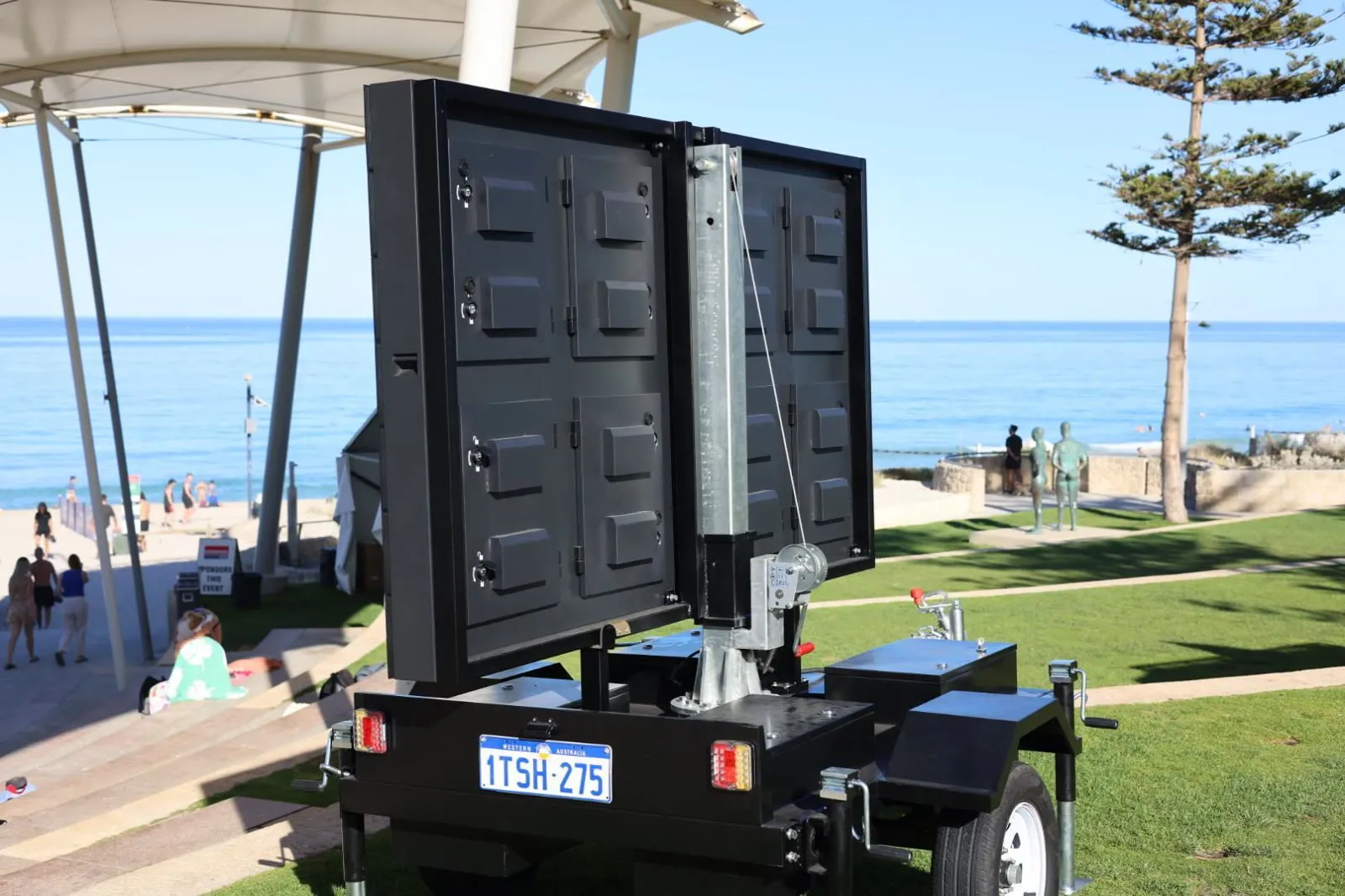
A full LED screen on a registered trailer — tow it to the reserve, level it, and you're scoring within minutes. Best for associations, local governments and schools that host sport across several grounds: one screen serves every venue, and it hires out between seasons.
Basic digit board
Fixed numeric digits for score and time — the lowest-cost way to get numbers off the chalkboard. No video, no replays, no sponsor content. Best where budget is the whole conversation, though many committees find sponsor revenue from a video screen changes the maths.
| Compare | Fixed LED scoreboard | Mobile scoreboard | Digit board |
|---|---|---|---|
| Best for | Permanent home grounds with a sponsor plan | Multi-venue associations, councils, carnivals | Junior ovals and tight budgets |
| What it shows | Live scores, replays, animations, sponsor loops | The same — wherever it's parked | Score and time only |
| Control | Any phone, tablet or laptop | Any phone or tablet at the ground | Basic wired or wireless controller |
| Sponsor revenue | Strong — sells screen time all year | Strong — sells per event and per venue | Structure signage only |
| Indicative budget | ≈ $50,000–$150,000+ installed | ≈ $40,000–$150,000 to buy; hire available | ≈ $10,000–$30,000 |
Budgets are indicative only — screen size, pixel pitch, structure and site conditions move every number. A site visit gets you a real one.
The budget question
What actually drives the price?
Five things set the cost of an LED scoreboard: screen size, pixel pitch, brightness and weather rating, the supporting structure, and the control software behind it. Two boards that look similar in a brochure can land tens of thousands of dollars apart once those five are specified properly — here's what each one does to the number.
Screen size & viewing distance
The biggest lever. Size is set by how far away the furthest spectator sits, not by ambition — a screen readable from the far wing costs more than one read from the fence. We size to your actual sight-lines, which sometimes means a smaller, better screen.
Pixel pitch
The distance between LEDs — tighter pitch means sharper images and higher cost per square metre. Spectators fifty metres away don't need the pitch a foyer screen needs, so paying for it is wasted money. Our guide to pixel pitch and why it matters covers the trade-off in plain English.
Brightness & weather rating
Outdoor boards need roughly 5,000 nits and an IP65-rated face to survive WA sun, rain and dust — a very different panel from an indoor screen at a tenth the brightness. This is where cheap imports quietly cut corners, and where boards fail early.
Structure & footings
Engineered steel, certified footings and wind-region compliance are a real share of the project — sometimes rivalling the screen itself. Reusing an existing structure, as we did at the Shire of Moora, can save a club serious money when the engineering checks out.
Control software & content
Scoring software set up for your sports, sponsor loops built and loaded, and training for the volunteers who'll run it. Budget boards skip this and become expensive digit boards; ours ship match-ready, with Buzzer control from any phone.
Support & pre-season checks
A scoreboard is a ten-plus-year asset. Panel spares, pre-season checks and rapid match-day support keep it that way — worth pricing in up front rather than discovering the gap in round one.
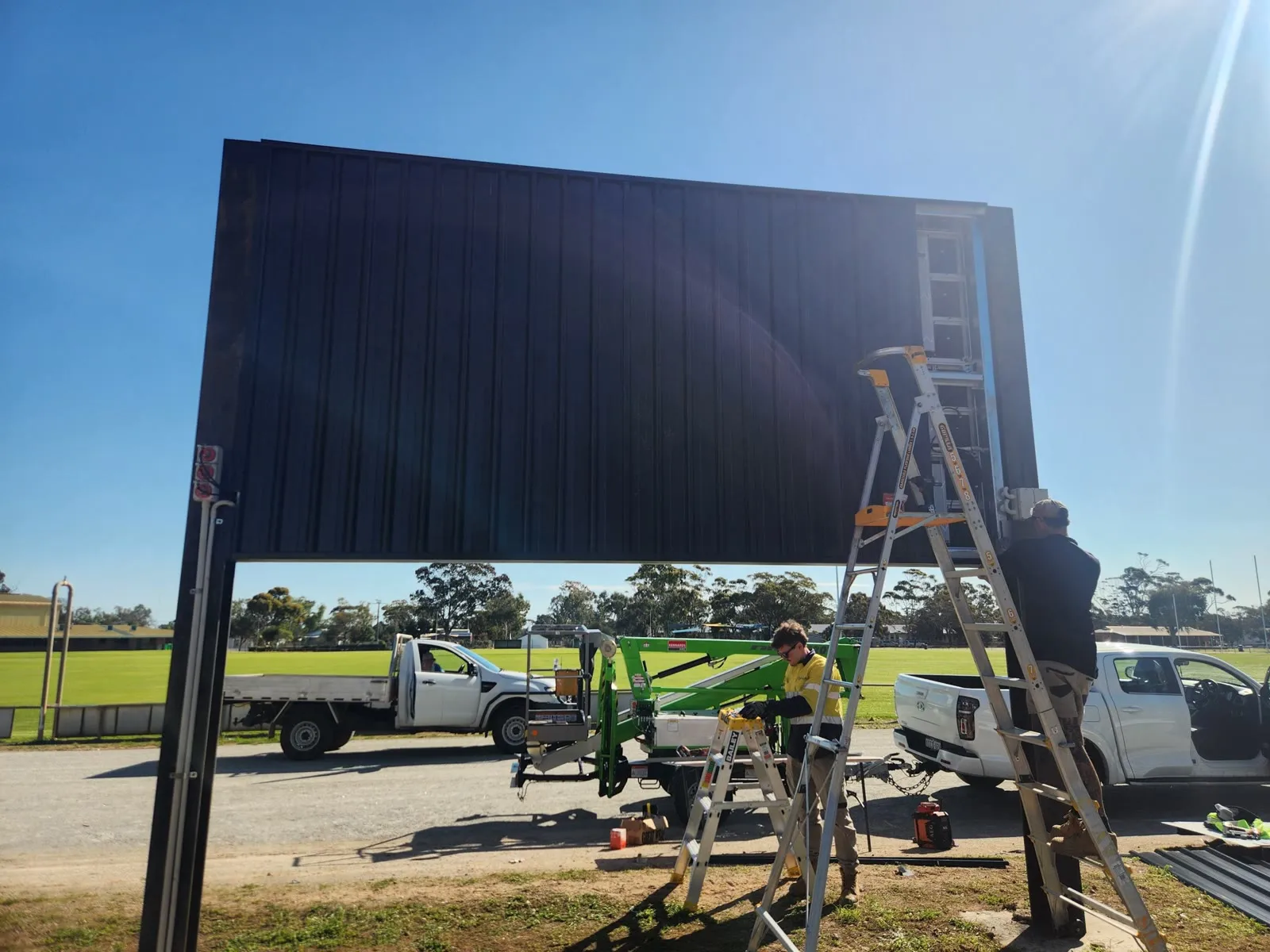
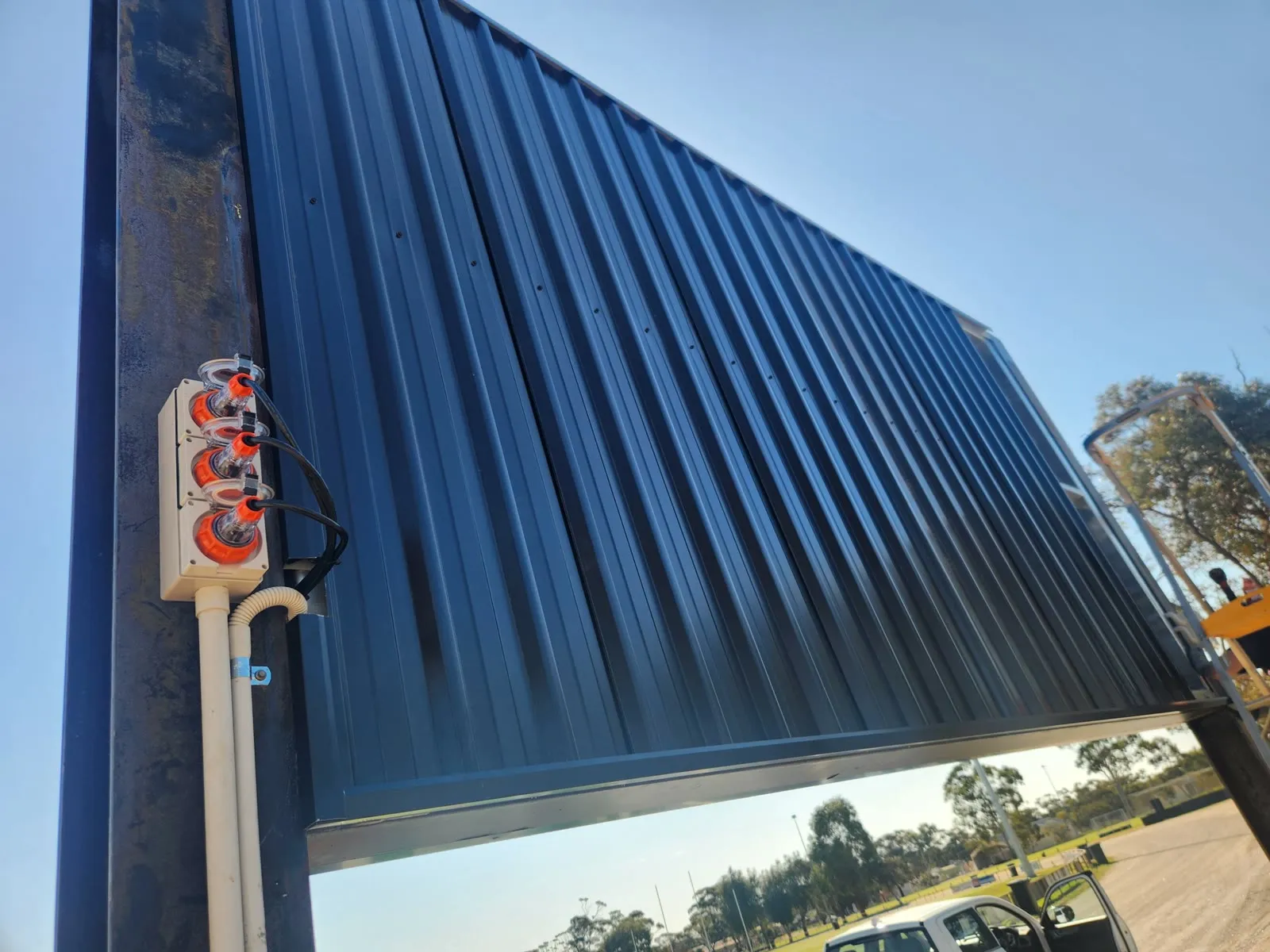
CSRFF grants: how WA clubs actually fund scoreboards
The Community Sporting and Recreation Facilities Fund (CSRFF) is the WA Government program that part-funds community sport infrastructure — and electronic scoreboards are a commonly funded item. Grants typically cover up to one-third of an eligible project's cost, with applications lodged through your local government on an annual cycle. For a club-grade board, that's real money: a third off turns a stretch purchase into a committee-approvable one.
A strong application needs exactly what a good scoreboard project produces anyway: a written specification, drawings, an itemised quote and evidence the design suits the site. Focus AV supplies all of it — we've supported community and local-government applications before, and we'll time the design work so your paperwork is ready when the funding round opens.
Score Buzzer
Control the scoreboard from any phone.
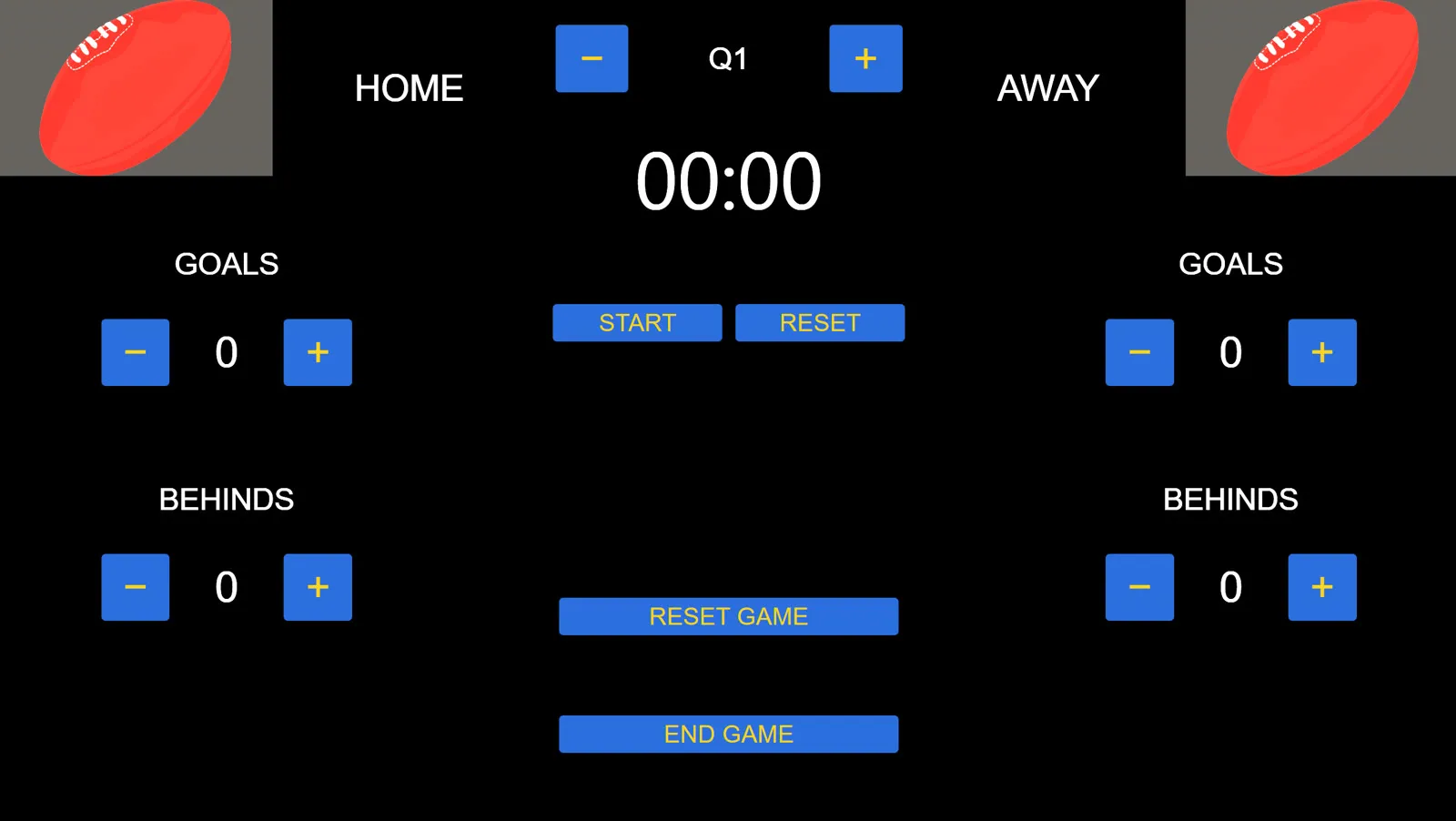
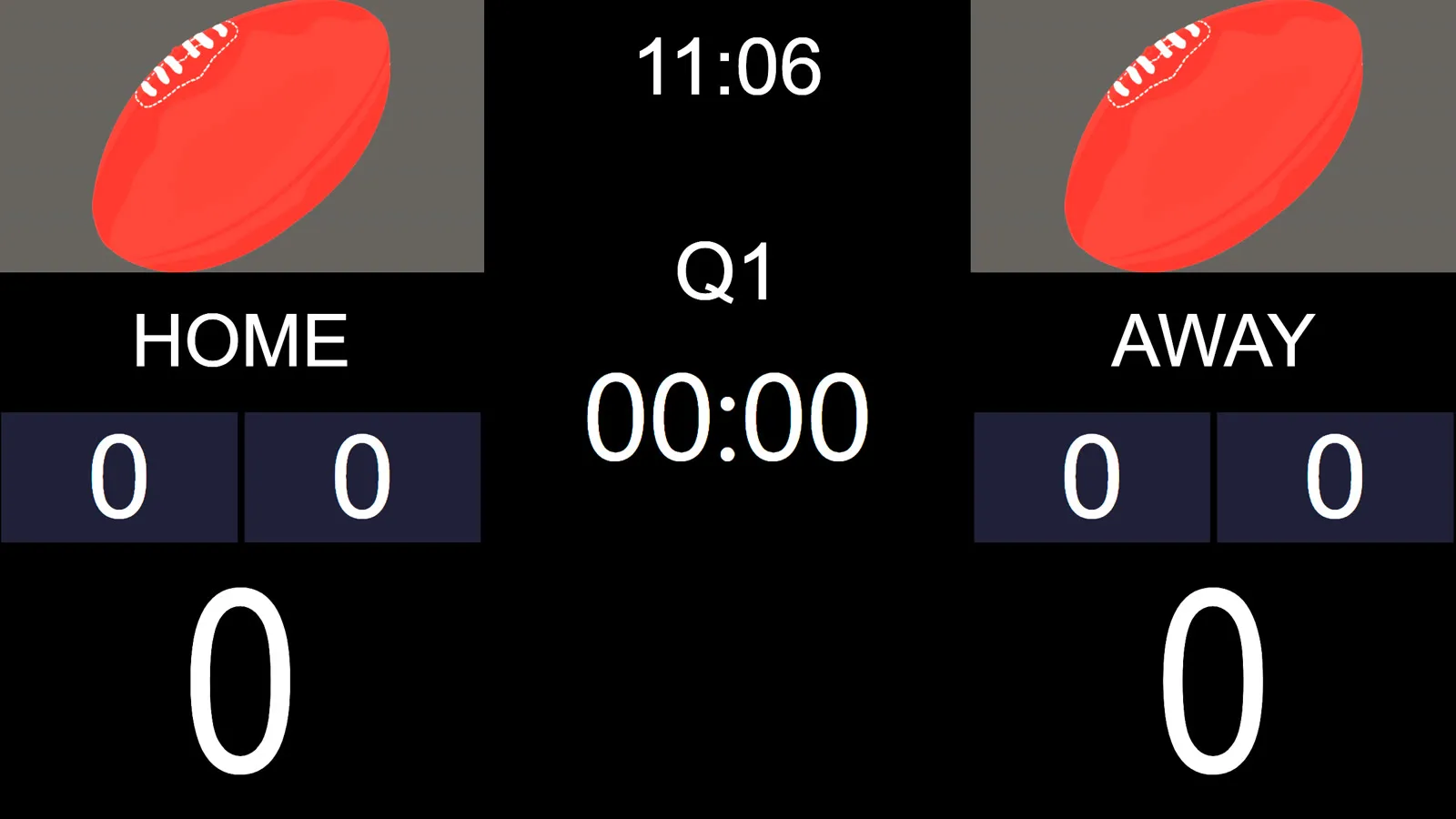
Buzzer is Focus AV's Perth-built scoreboard control system: open the browser on any phone or tablet and you're scoring on the big screen. No app to install, nothing to update, nothing for a new volunteer to learn twice. Don't take our word for it — this mock is live. Tap the phone.
Buzzer
runs in the browser — no app installed
Home
Away
Any phone, any tablet, any browser. This mock is the real control layout.
Home
00
10:00
Quarter 1
Away
00
Focus AV · Solutions Focused
No app. Any device.
Because Buzzer runs in the browser, every committee member's phone is already a controller. Hand the timekeeper a link, not a manual — they're scoring in minutes, even if they've never seen the system before.
Real-time, every code
Scores, timers and sirens update on the screen the instant they're tapped, with layouts for footy, soccer, cricket, netball, basketball, hockey and volleyball. Switch sports in a couple of taps — one board, the whole fixture list.
Sponsors between sirens
Team logos, animations and sponsor messages run automatically whenever the clock stops — the screen keeps selling while the scorer worries about the score. Software and hardware come as one supported package, with built-in redundancy for match day.
Every code covered
One screen, every sport.
The same scoreboard runs footy on Saturday, cricket through summer and a junior carnival on Sunday — the scoring software changes code in a couple of taps. Focus AV boards are scoring AFL, soccer, cricket, hockey, volleyball, netball and basketball across WA right now.
Aussie Rules
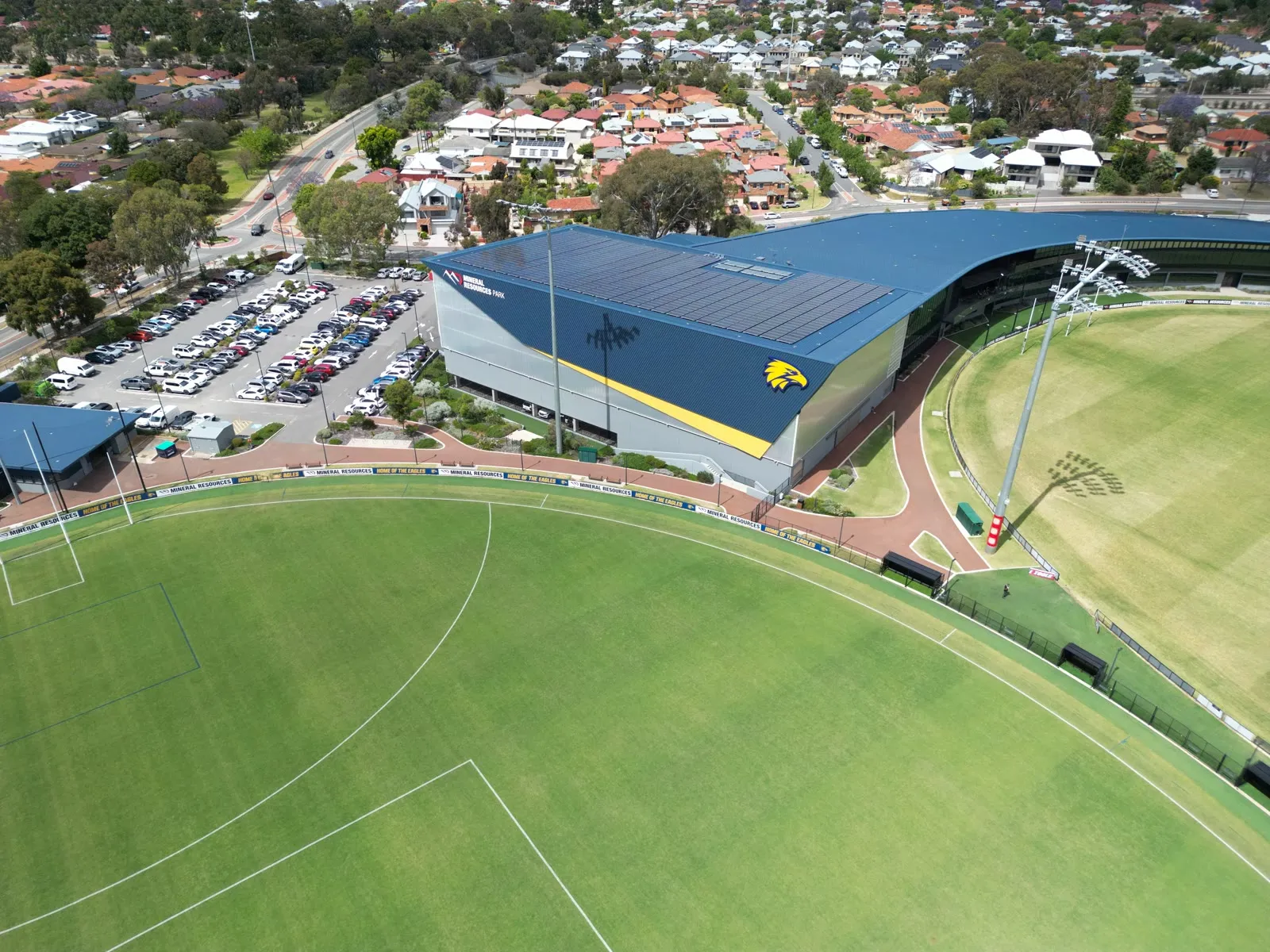
Goals, behinds, quarters and countdown clocks in a layout every footy crowd reads instantly — the format we deliver most, from country leagues to the West Coast Eagles' board at Mineral Resources Park.
Soccer
Match clock, score and half indicators with sponsor loops at the break — see the Perth Soccer Club scoreboard upgrade, live beside the pitch the week the season opened.
Cricket
Runs, wickets, overs and run rate through the long summer months. Shared footy–cricket grounds are exactly where one LED board earns its keep — the Shire of Moora's community board serves both seasons from the same screen.
Volleyball & indoor courts
Sets, points, timeouts and rotation — indoor boards trade weather-proofing for tighter pixel pitch at closer viewing distances. Volleyball WA's LED scoreboard is the state-level proof.
Hockey
Quarters, penalty-corner counts and shootout formats, on turf venues where the board also carries club news and sponsor content between fixtures — hockey grounds host long tournament days, and the screen works all of them.
Basketball & netball
Period timers, team fouls, sirens and shot-clock integration for stadium courts — plus multi-court layouts for association venues running eight games at once on a Saturday morning.
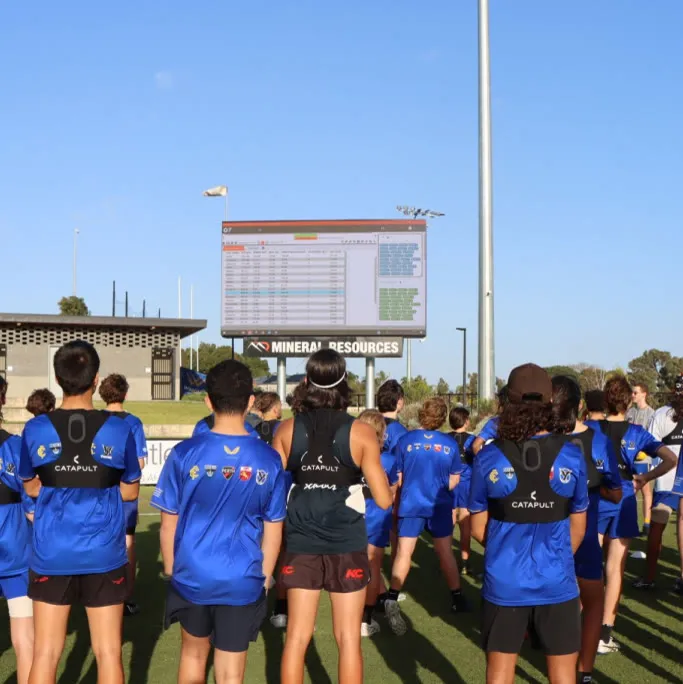
Engineered for WA weather
Bright enough for noon. Tough enough for February.
An outdoor scoreboard in WA needs around 5,000 nits of brightness to stay legible in direct summer sun, an IP65-rated face against rain and dust, and a structure certified for the local wind region. Indoor screens manage a tenth of that brightness — which is why a repurposed indoor panel on an oval always disappoints.
Brightness in nits
Nits measure light output: indoor screens sit around 600–1,200, outdoor scoreboards need 5,000 or more to beat direct sun. Good boards also auto-dim after dark, so night training doesn't light up the neighbourhood.
IP ratings
The IP number is the weather-proofing spec: IP65 on the screen face means sealed against dust and driven rain, with IP54 or better behind. On a coastal or wheatbelt ground, this rating is the difference between a ten-year asset and a warranty argument.
Heat management
A 40-degree WA afternoon on an exposed oval is the real stress test. Outdoor-rated panels are specified for hot operating temperatures, with ventilation and internal airflow designed in — heat is what quietly kills under-specified screens.
Wind & structure
A scoreboard is a sail. Structures are engineered to the site's wind region and certified with proper footings — non-negotiable paperwork your council and insurer will expect, and documentation we produce as standard.
Sun, UV & contrast
UV-stable masks and shading louvres above each LED row keep contrast high under harsh light and stop the surface fading. Orientation matters too — we plan the board's aspect against the afternoon sun path during site design.
Serviceability
Panels are modular: if a section ever fails, it swaps out individually rather than condemning the screen. We spec service access from the front or rear to suit the structure, and hold spares for the boards we support.
From the field
A scoreboard, start to siren.
The West Coast Eagles' board at Mineral Resources Park — steel, panels, lift and first live score, shot by the crew who built it.
Boards in play, across WA.
What we deliver
Designed for the ground. Built for the weather.
Site & structural design
Viewing distance, sight-lines, sun path and wind region drive the size, pitch and structure — engineered and certified for WA conditions.
Outdoor LED supply & install
High-brightness, weather-rated LED panels on engineered steel — installed with the footings, access and power coordinated by us.
Scoreboard software
Simple, sport-aware scoring your volunteers can run from a laptop or tablet — AFL, soccer, cricket, netball, multi-sport clubs covered.
Sponsor & replay content
Sponsor loops, club promos and live camera or replay feeds — the screen earns money when the clock stops.
PA & match-day audio
Scoreboard and sound as one system: announcements, sirens and music that reach the whole ground without deafening the fence line.
Service & pre-season checks
Panels, power and software checked before the season starts — and rapid support if match day ever misbehaves.
Proof at every level
From the Eagles to your oval.
The same team, engineering standards and software discipline at every scale.
AFL
West Coast Eagles match-day scoreboard
State
Volleyball WA high-tech LED scoreboard
Club
Perth Soccer Club scoreboard upgrade
Regional
Shire of Moora community scoreboard
Proof
Delivered. Documented.
The whole room
One design. One schedule. One accountable partner.
Straight answers.
How much does an electronic scoreboard cost?
As an indicative guide only: basic electronic digit boards land around $10,000–$30,000, club-grade outdoor LED scoreboards typically fall between $50,000 and $150,000 installed, and larger stadium screens run well beyond that. Screen size, pixel pitch, brightness rating and the structure move the number most — and WA clubs frequently fund up to a third of it through a CSRFF grant. The honest way to a firm number is a site visit, and we'll design the screen with sponsor revenue in mind so it starts paying itself off.
What is a mobile scoreboard?
A mobile scoreboard is a full LED screen mounted on a registered trailer — towed to the ground, levelled, switched on and scoring within minutes. It suits sporting associations, local governments and schools that host sport across several reserves, because one screen serves every venue. They're available to buy or hire, and they run the same scoring software and sponsor content as a fixed board.
Can we control the scoreboard from a phone?
Yes. Buzzer, our Perth-built scoreboard control system, runs from the browser on any phone or tablet — there's no app to install, so any committee member's phone becomes the controller. Scores, timers, sirens and sponsor content all update on the big screen in real time.
Are there grants for scoreboards in WA?
Yes — the WA Government's Community Sporting and Recreation Facilities Fund (CSRFF) part-funds community sport infrastructure, and electronic scoreboards are a commonly funded item. Grants typically cover up to one-third of an eligible project's cost, with applications lodged through your local government on an annual cycle. Focus AV supplies the specification, drawings and itemised quote your application needs.
How bright does an outdoor scoreboard need to be?
Around 5,000 nits or more to stay legible in direct WA sun — roughly five to ten times brighter than an indoor screen. Outdoor boards also auto-dim after dark so evening training and neighbouring houses aren't blasted. This is why a repurposed indoor panel outdoors always disappoints: it simply can't be read at noon.
Can volunteers actually run it?
Yes — that's a design requirement, not an afterthought. Scoring runs from a phone, tablet or laptop with big obvious controls per sport, and sponsor content plays automatically. We train your people at handover and leave crib sheets behind.
Can it show replays and live camera?
Yes — add a camera feed and the scoreboard becomes a big screen: replays, presentations, movie nights and sponsor activations. It's the difference between a scoreboard and a venue asset.
Do you service scoreboards you didn't install?
We do — panel repairs, controller replacements and software rescues on existing boards are common jobs for us. If it's worth saving, we'll save it; if it isn't, we'll say so.
Planning a scoreboard? We'll meet you at the ground.
Bring the committee. We'll measure the site, talk sponsors and software, and give you a number the club can plan around.