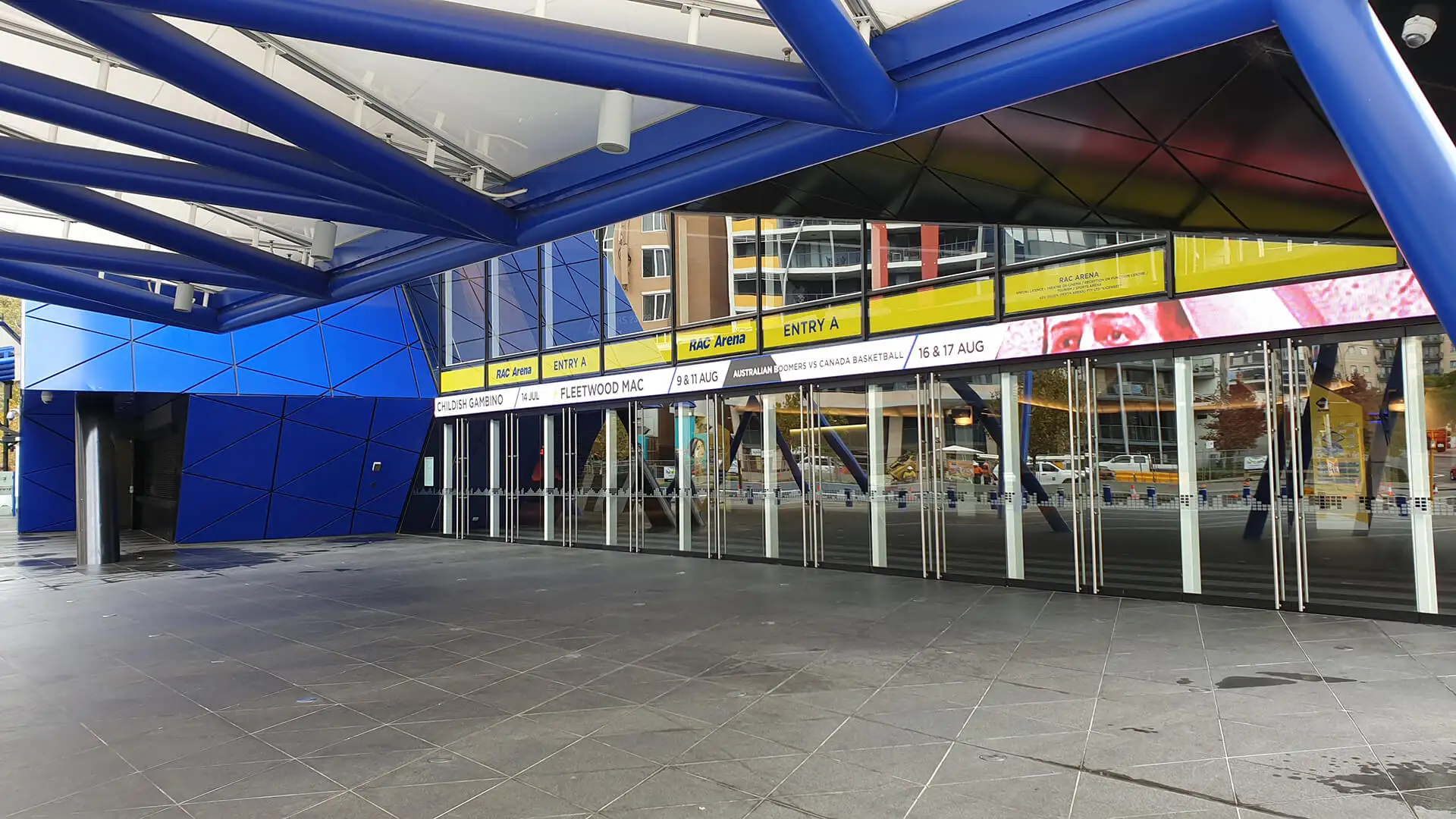
LED Screens
Impossible to ignore.
Seamless LED at any size — lobby walls that stop visitors, window screens that stop traffic, arena screens that hold fifteen thousand people. Designed and installed by the team behind RAC Arena's LED.
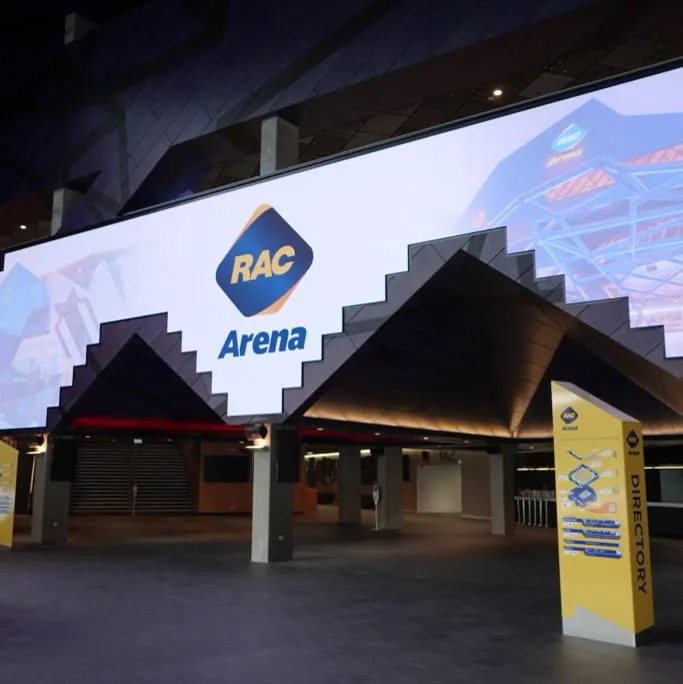
Yes, that RAC Arena
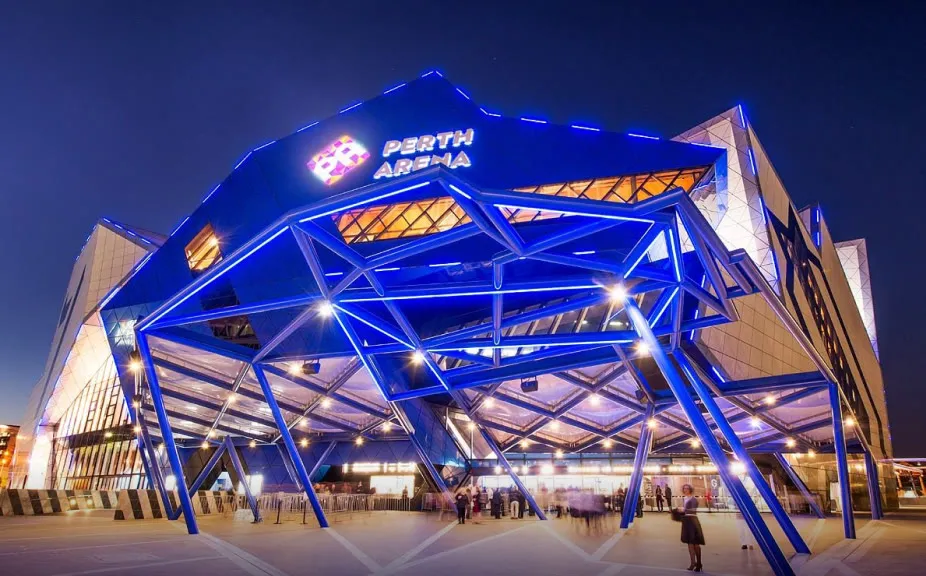
We're the reason the Arena glows.
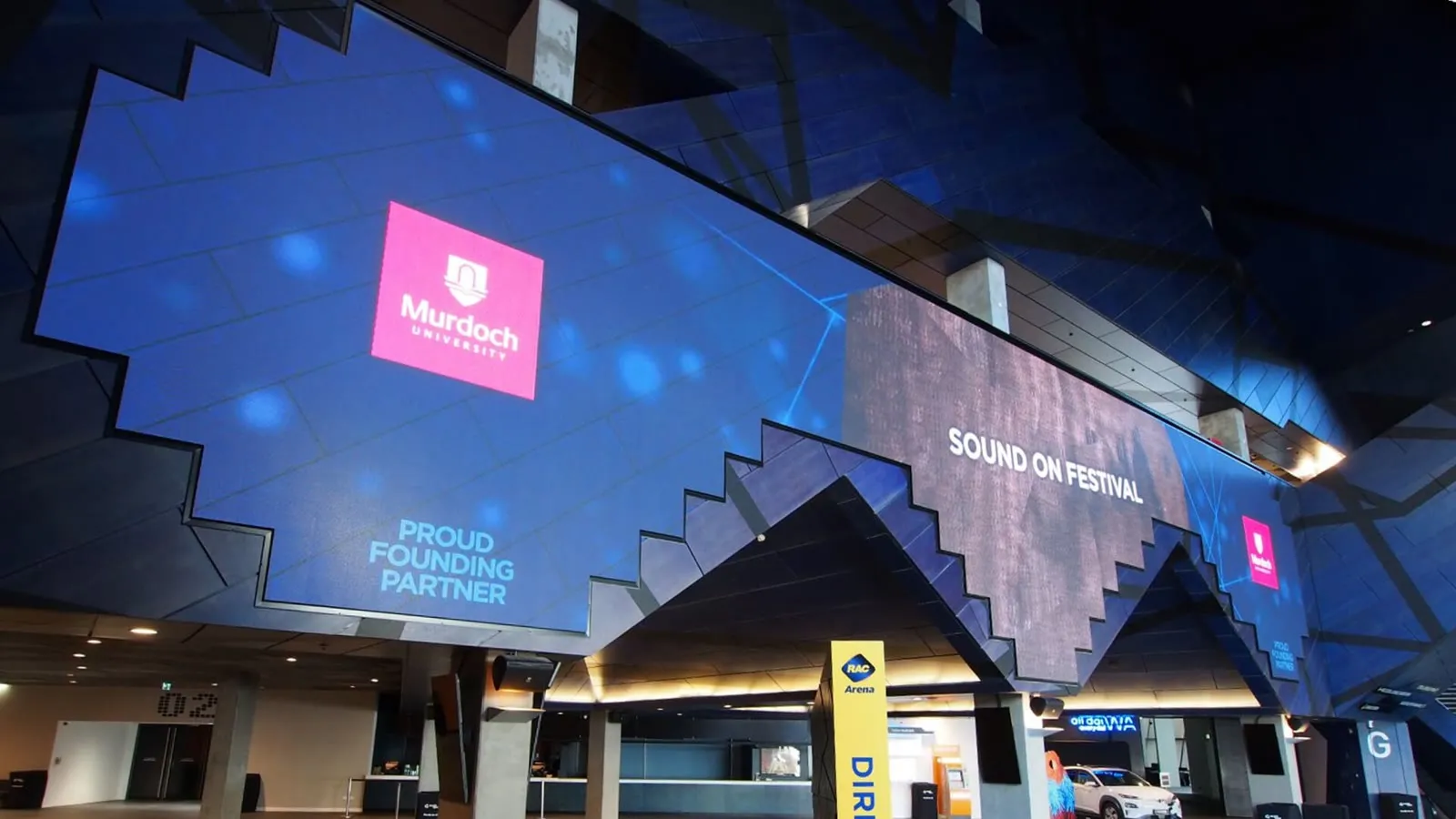
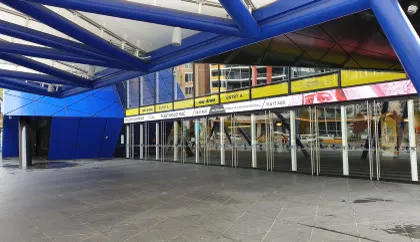
When RAC Arena lights up blue on event night, that's Focus AV's LED work — a landmark-scale installation across one of the most photographed buildings in Perth, engineered into an architectural lattice that was never designed to hold screens.
Big LED is a different discipline from hanging displays. Panels arrive as bare modules and become one seamless canvas only if the structure is millimetre-true, the power and data are redundant, and the processor is calibrated to the content it will actually show.
The same team delivers indoor LED walls for foyers and boardrooms, window-facing retail screens, and outdoor advertising screens — specified for Perth brightness, engineered for WA wind, and supported after the ribbon is cut.
Anatomy of an LED project
What's behind a seamless wall.
Auto-cycles every two seconds. Tap a part to jump to it.
 The whole room
 Getting LED right
Pixel pitch is physics, not marketing.
LED is bought by the square metre but experienced by the viewing distance. The pitch that looks flawless across a foyer looks like graph paper at arm's length — and the outdoor panel that dazzles at dusk washes out at noon unless brightness was specified for Perth sun, not a showroom.
This is why LED projects live or die in the design: pitch matched to distance, brightness to environment, structure to wall or wind load, and a processor that makes the content look as good as the panels.
Focus AV has designed and installed LED from boardroom video walls to RAC Arena — and we wrote the guide on pixel pitch that half of Australia reads before buying. We'll spec what the space needs, not what the catalogue is pushing.
LED or LCD?
LED wall vs LCD video wall.
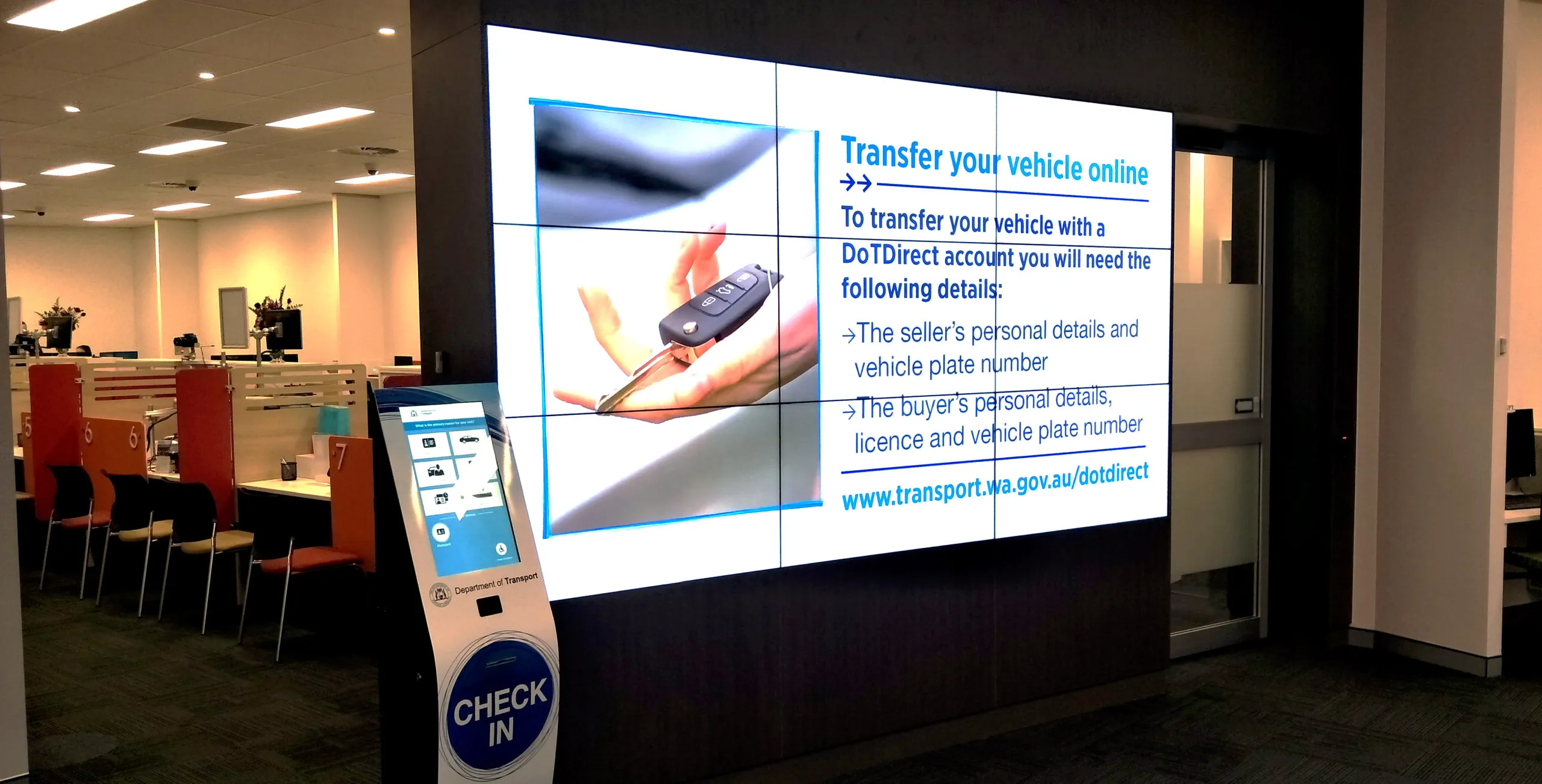
A direct-view LED wall is one continuous image built from borderless modules; an LCD video wall is a grid of thin-bezel panels with visible joins. LED wins on scale, brightness and the uninterrupted canvas; LCD wins on close-up resolution per dollar. The right call comes down to viewing distance, ambient light and budget.
| Factor | Direct-view LED | LCD video wall |
|---|---|---|
| Joins | None — modules butt together into one uninterrupted canvas | Visible bezel lines at every join, even on "extreme narrow bezel" panels (~1–2mm) |
| Brightness | 800–1,500 nits indoors, 4,000+ outdoors — untroubled by daylight | 500–700 nits — happiest in controlled lighting |
| Size & shape | Any size, any aspect — flat, curved, wrapped around architecture | Fixed to multiples of the panel size, flat only |
| Close-up detail | Set by pixel pitch — fine pitch is where the money goes | Full 4K per panel — the cheapest sharp pixels at arm's length |
| Lifespan | ~100,000 hours to half brightness — a decade of heavy duty | ~50,000–60,000 hours, with panels swapped as colour drifts |
| Serviceability | Front-serviceable modules swapped in minutes | Whole panels replaced — colour-matching an aged wall is a lottery |
| Best for | Foyers, shopfronts, auditoriums, outdoor — anything over ~3m wide | Control rooms and data-dense walls read from a metre or two away |
For foyers and shopfronts, LED has largely won this argument. Where operators sit close and read fine detail all day, LCD still earns its place — that world lives on our control room AV page. And at the premium end, micro-LED products like Samsung The Wall bring fine pitch and the LED canvas together in one product.
Pixel pitch
Pitch sets the price — distance sets the pitch.
Pixel pitch is the gap in millimetres between LED pixels, and the rule of thumb is simple: pitch in millimetres roughly equals the minimum comfortable viewing distance in metres. A 2.5mm wall looks flawless from 2.5 metres; a 10mm billboard needs 10. Finer pitch than your real viewing distance demands is money spent on pixels nobody can see.
| Pixel pitch | Minimum viewing distance | Where it belongs |
|---|---|---|
| 0.9–1.5mm | ~1–1.5 metres | Boardroom walls, control rooms, broadcast backdrops |
| 1.8–2.5mm | ~2–2.5 metres | Foyers, auditoriums, premium retail interiors |
| 2.6–3.9mm | ~3–4 metres | Shopfront windows, large indoor venues |
| 4–6mm | ~4–6 metres | Outdoor scoreboards, building facades, forecourts |
| 8–10mm+ | ~8–10+ metres | Roadside advertising, stadium screens |
Want the full picture before we measure your wall? We wrote a plain-English guide — What is pixel pitch (LED) and why is it important? — that gets read Australia-wide for a reason.
Try it yourself
Pitch, distance — watch them argue.
Every LED wall is a negotiation between pixel pitch and viewing distance. Drag both and watch the same content sharpen, dissolve into dots, or quietly tell you you're paying for pixels nobody will ever see.
2.5mm
2.5m
- Min distance
- 2.5m
- Sweet spot
- 6.3m
- Pixels vanish
- 8.5m
Indoor vs outdoor LED
Outdoor is a different engineering problem.
Indoor LED walls run under 1,000 nits and hang on interior structure. Outdoor LED needs 4,000–7,500 nits to beat Perth sun, IP65-sealed modules and cabinets, and certified structure for WA wind loads. It isn't a brighter version of the indoor product — it's a different product on different steel.
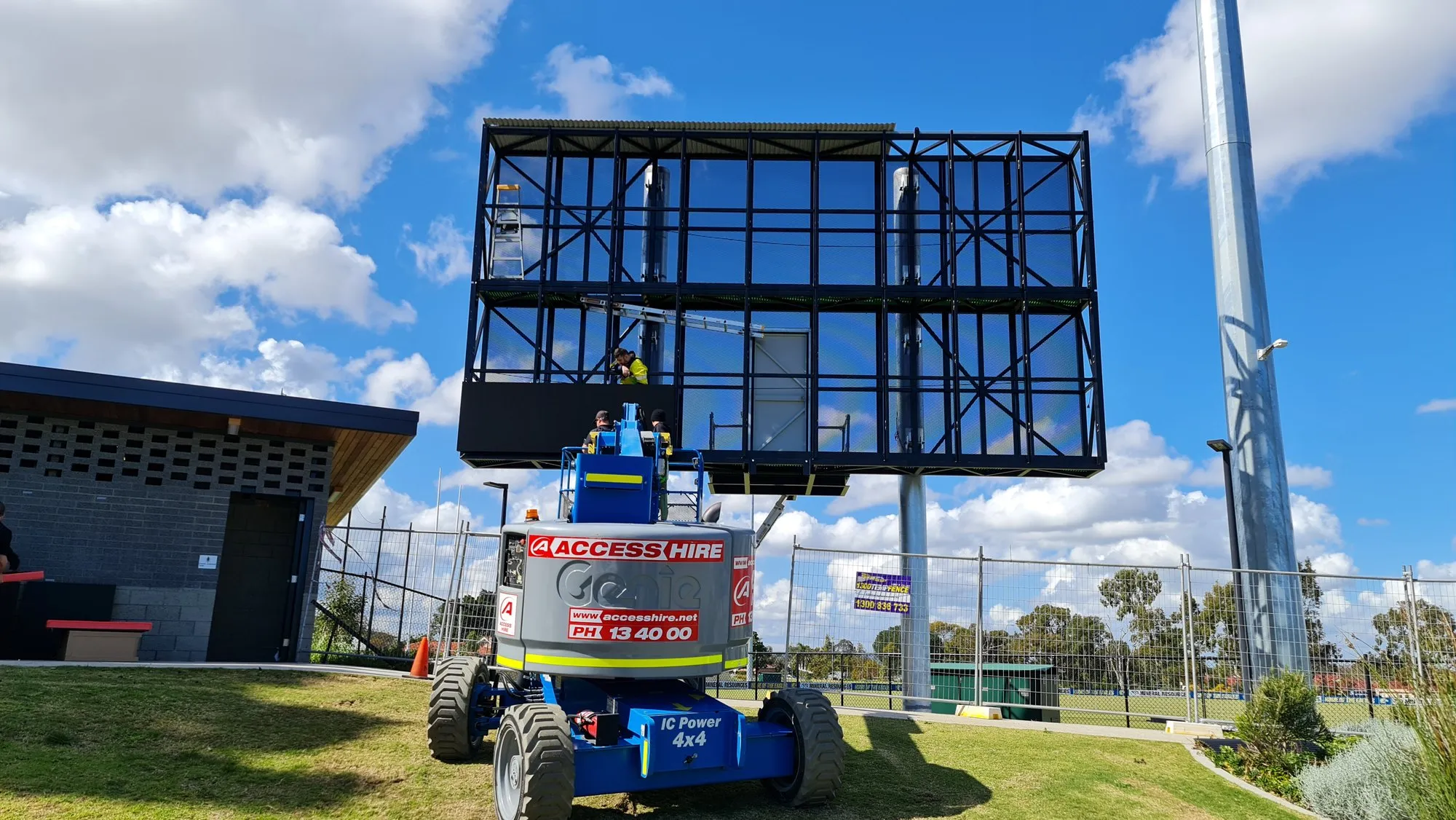
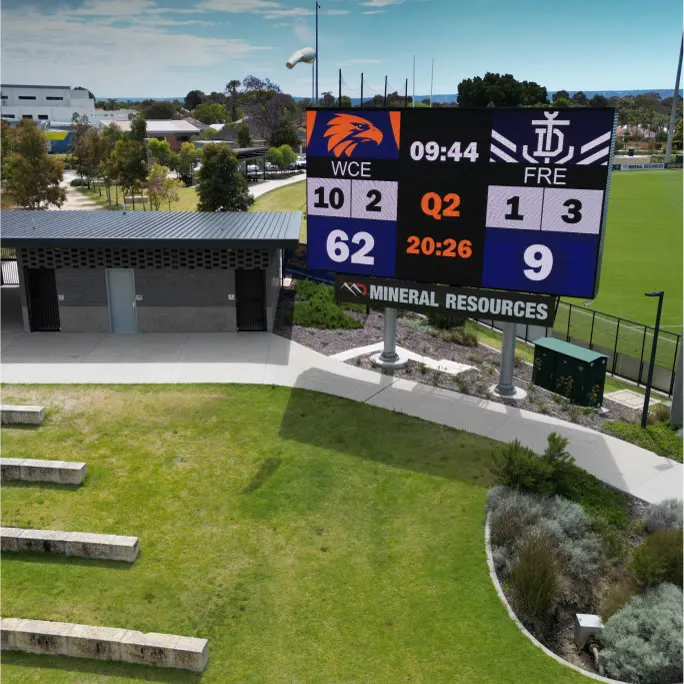
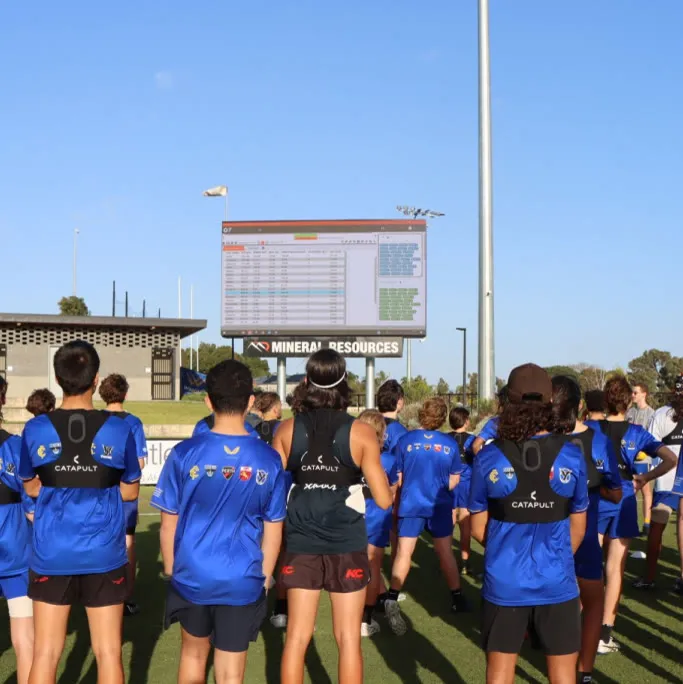
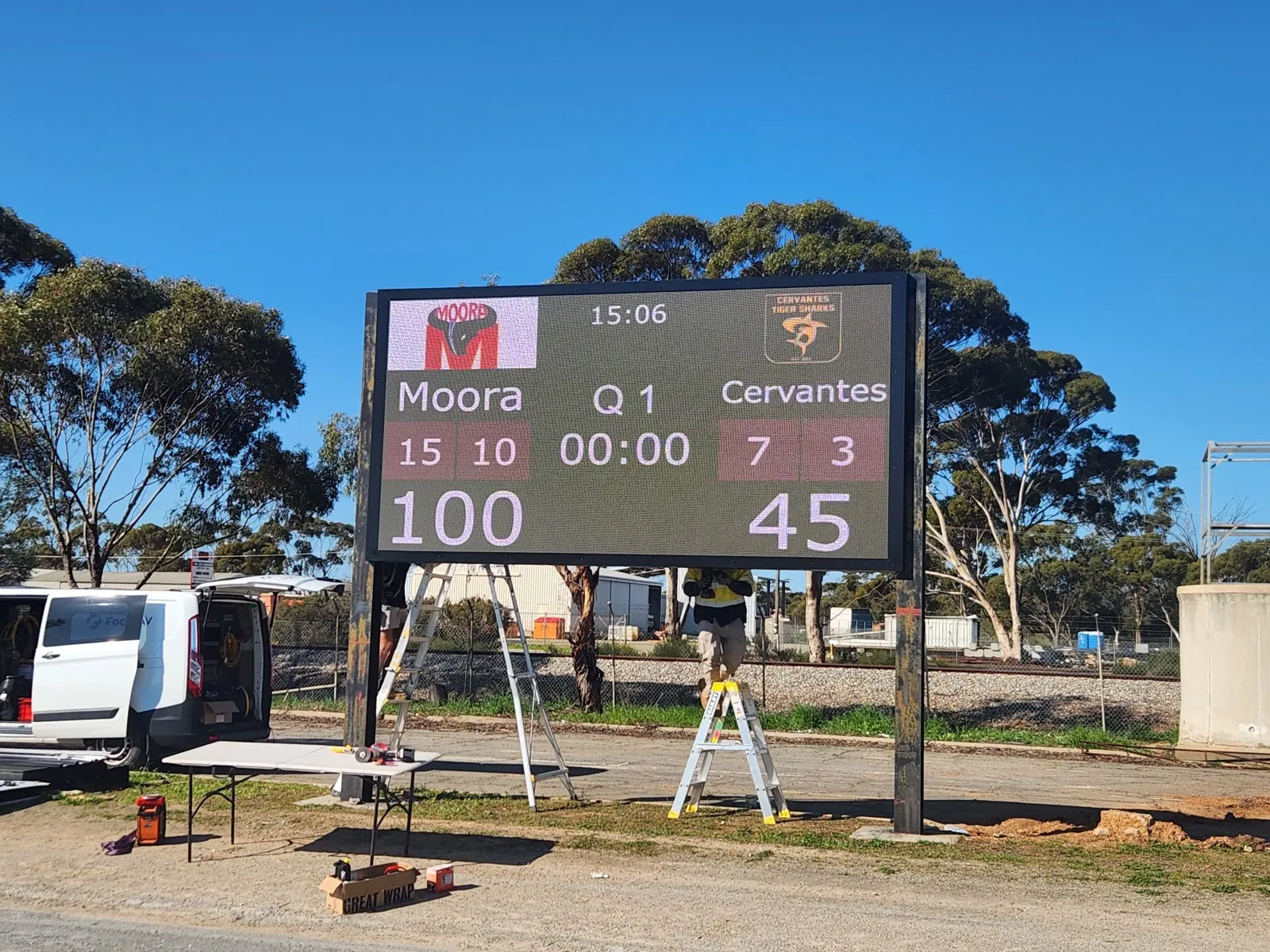
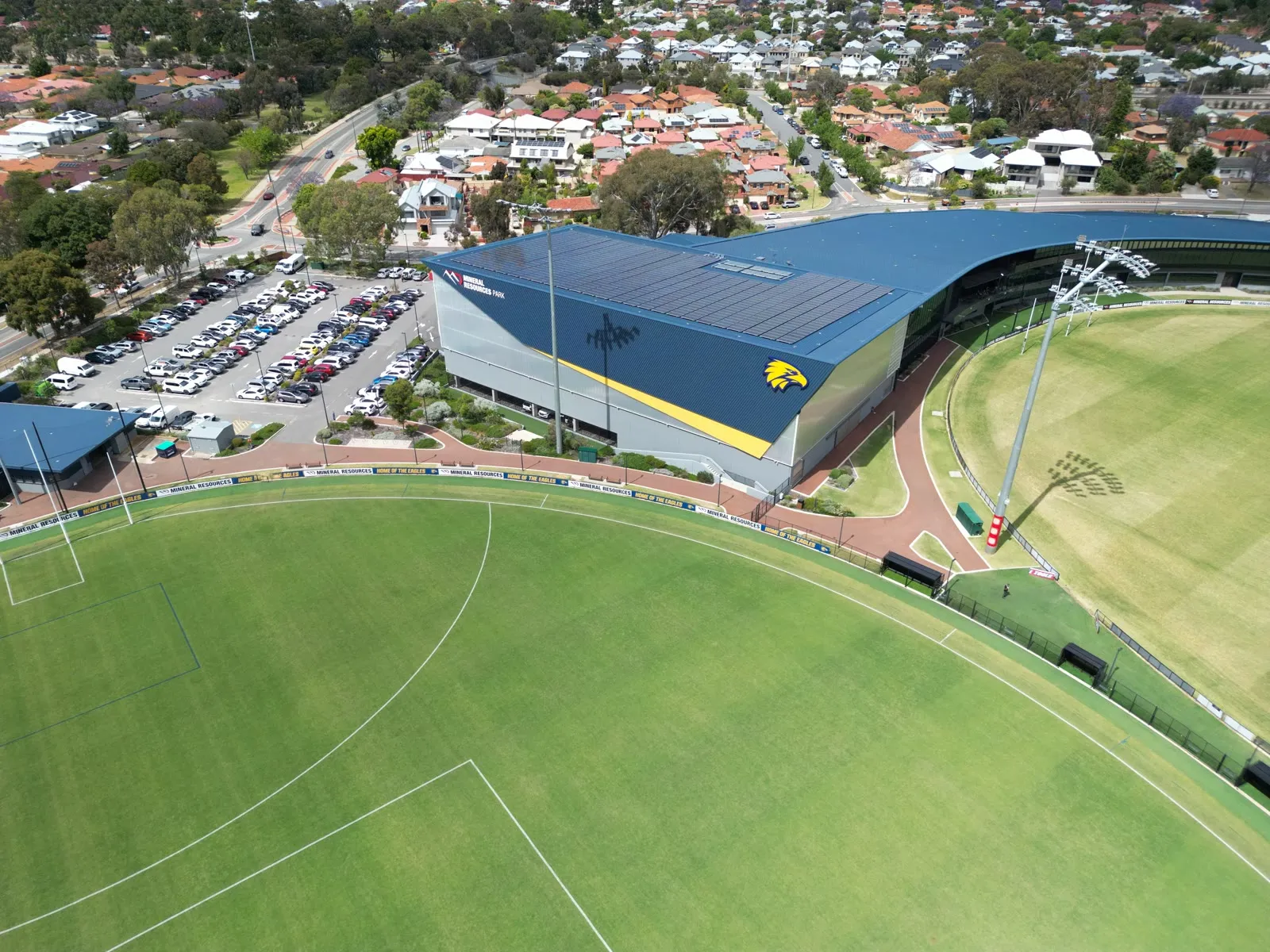
Outdoor also brings obligations the brochure skips: thermal design for 40°C days, corrosion resistance near the coast, automatic brightness sensors so the screen dims at night instead of blinding the neighbourhood, and service access planned before the crane leaves. It's the discipline behind the outdoor scoreboards we've delivered for the West Coast Eagles and the Shire of Moora — full detail on our LED scoreboards page.
Indoors, the game is finesse: fine pitch, flush architectural framing and a content pipeline sized to the exact canvas. Window-facing LED sits between the two — indoor mounting, outdoor brightness. And whatever the format, the scheduling side is the same discipline as digital signage — often the same CMS drives both.
Buying vs hiring
Buy an LED screen, or hire one?
Straight answer: Focus AV designs and installs permanent LED screens — we don't do hire. If you need a screen for a single event, a Perth staging company is the right call. If the screen will work more than a handful of weekends a year, buying starts winning the maths surprisingly quickly.
When hiring makes sense
One-off product launches, festivals, a single broadcast or AGM. You pay for the screen, crew, rigging and de-rig every time, but you carry no capital, no maintenance and no storage. For a genuinely occasional need, that trade is fair — hire it and don't look back.
When buying wins
Venues, clubs, schools and shopfronts that use the screen weekly; advertising screens that earn; scoreboards used every season. Event hire runs to thousands per weekend — recurring use outruns the cost of owning within a season or two. Our Shire of Moora scoreboard is that maths working for a regional council.
What to ask any LED screen hire company
- What pixel pitch — and is it fine enough for your closest audience member?
- How many nits — will it survive a west-facing afternoon at your site?
- Is the rigging engineered and certified for the wind exposure?
- Is a technician included for the event, or just delivery and pickup?
- What resolution should your content be built at for their processor?
- What's the weather contingency — and who carries that risk?
How a project runs
From tape measure to first light.
An LED screen project typically runs six to twelve weeks from engineering sign-off to first light, driven by panel lead times and structural work. The install itself is days — the design is what takes the time, and it's where the result is decided.
Measure & model
Real viewing distances, ambient light and sight lines. Pitch and brightness fall out of measurement, not out of the catalogue.
Engineering
Structure, wind loading, footings or wall fixings — certified before a single panel is ordered.
Panels & processing
Panels from ranges we've proven in WA conditions, and a processor mapped to the exact pixel canvas the content will fill.
Install millimetre-true
Framing set flat and square to tolerances you'll never see — which is exactly the point. That's what makes ten thousand modules read as one surface.
Calibrate & commission
Brightness, colour and uniformity tuned to the room or the street, and the content workflow handed over working.
Spares & service
A sensible spares kit and ongoing care under Focus Care keep every pixel in service for the decade the panels are rated for.
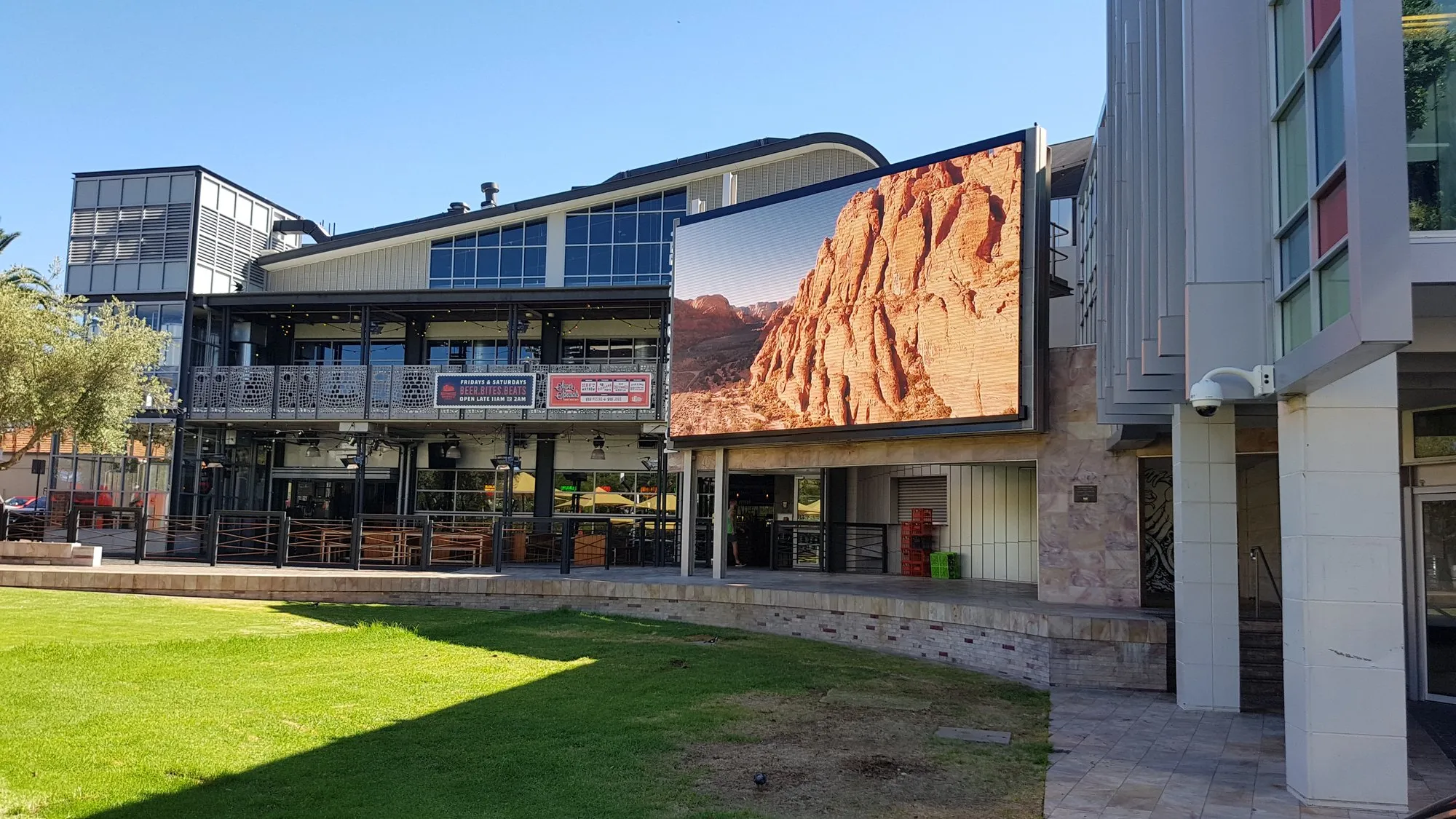
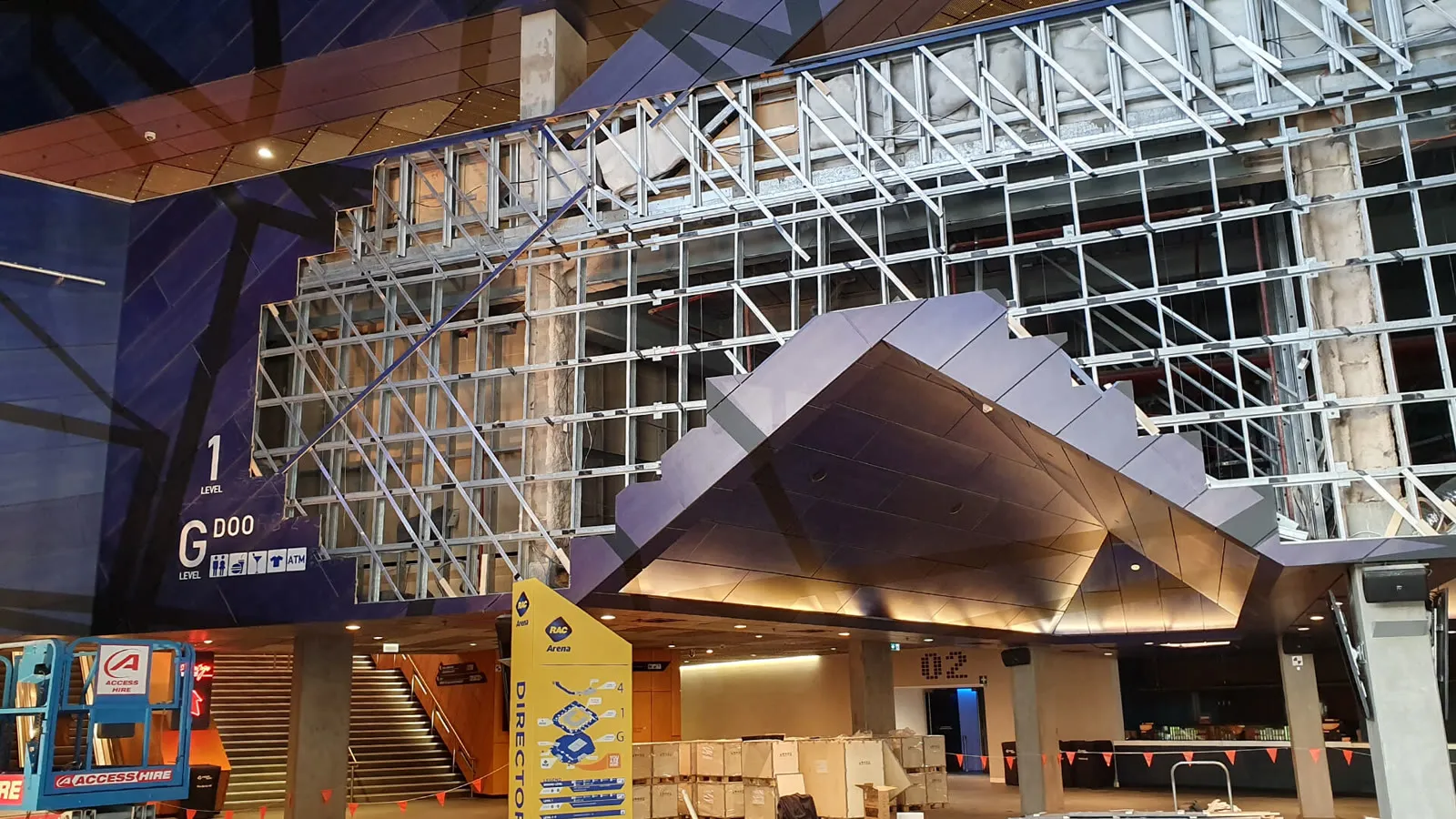
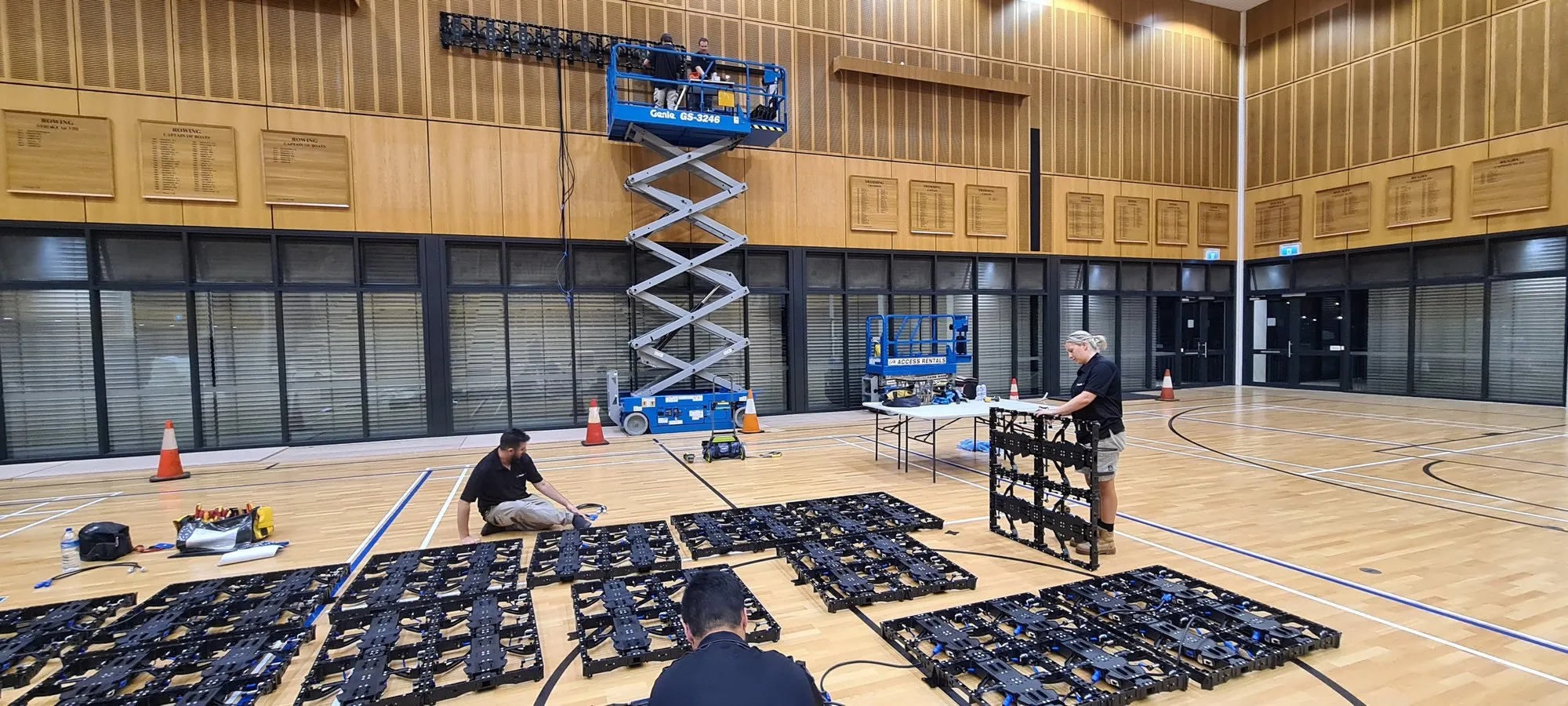
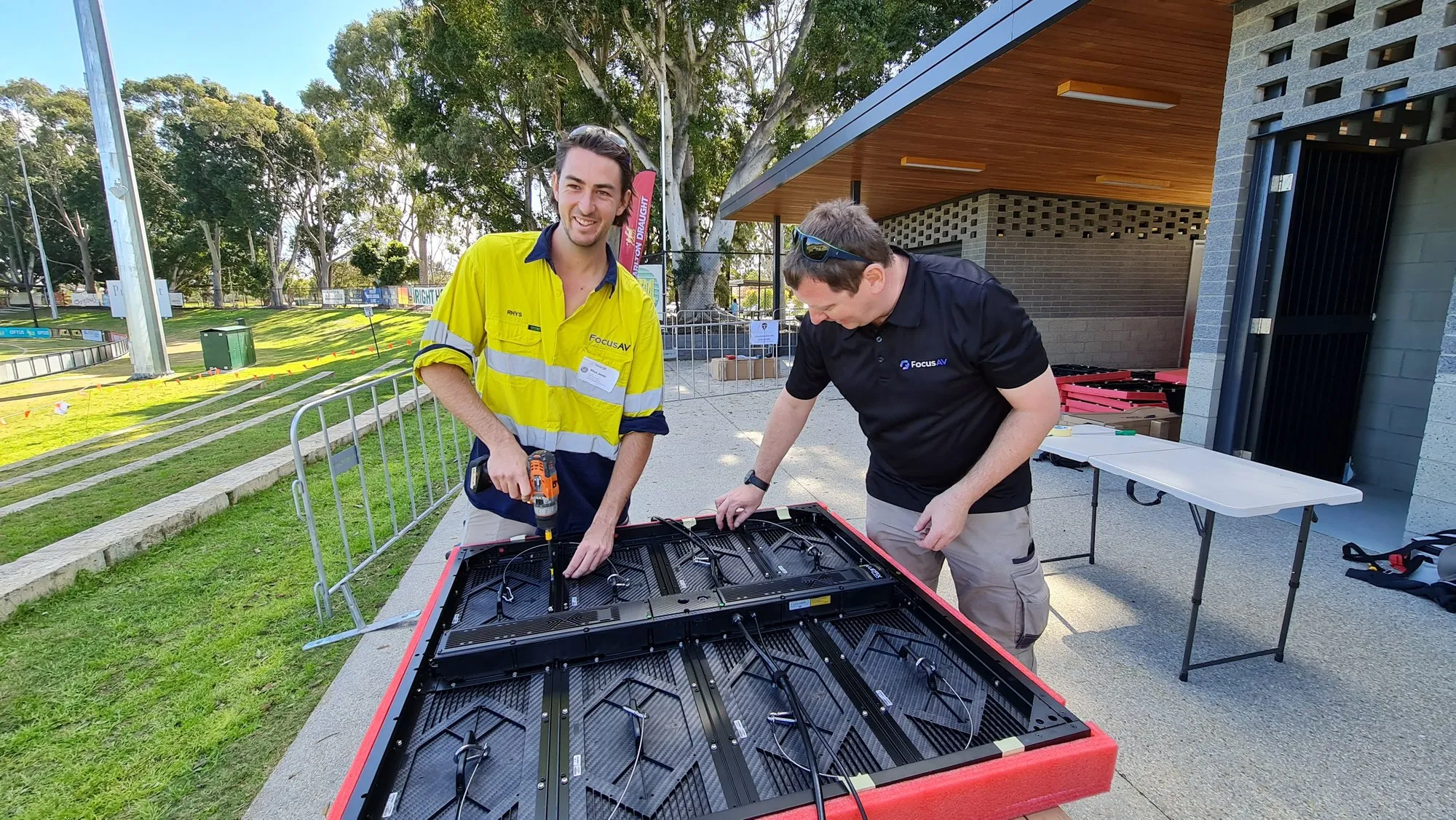
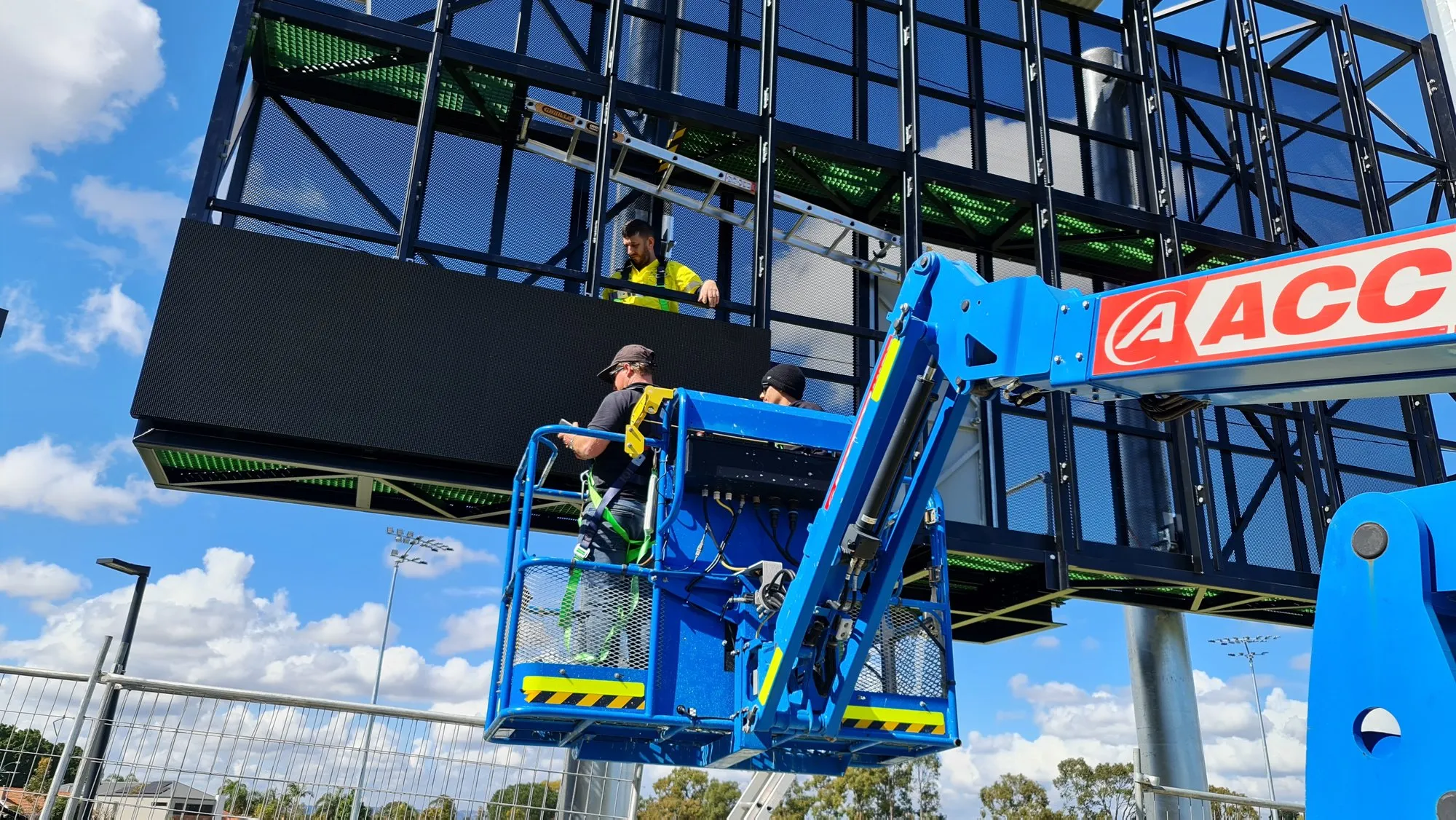
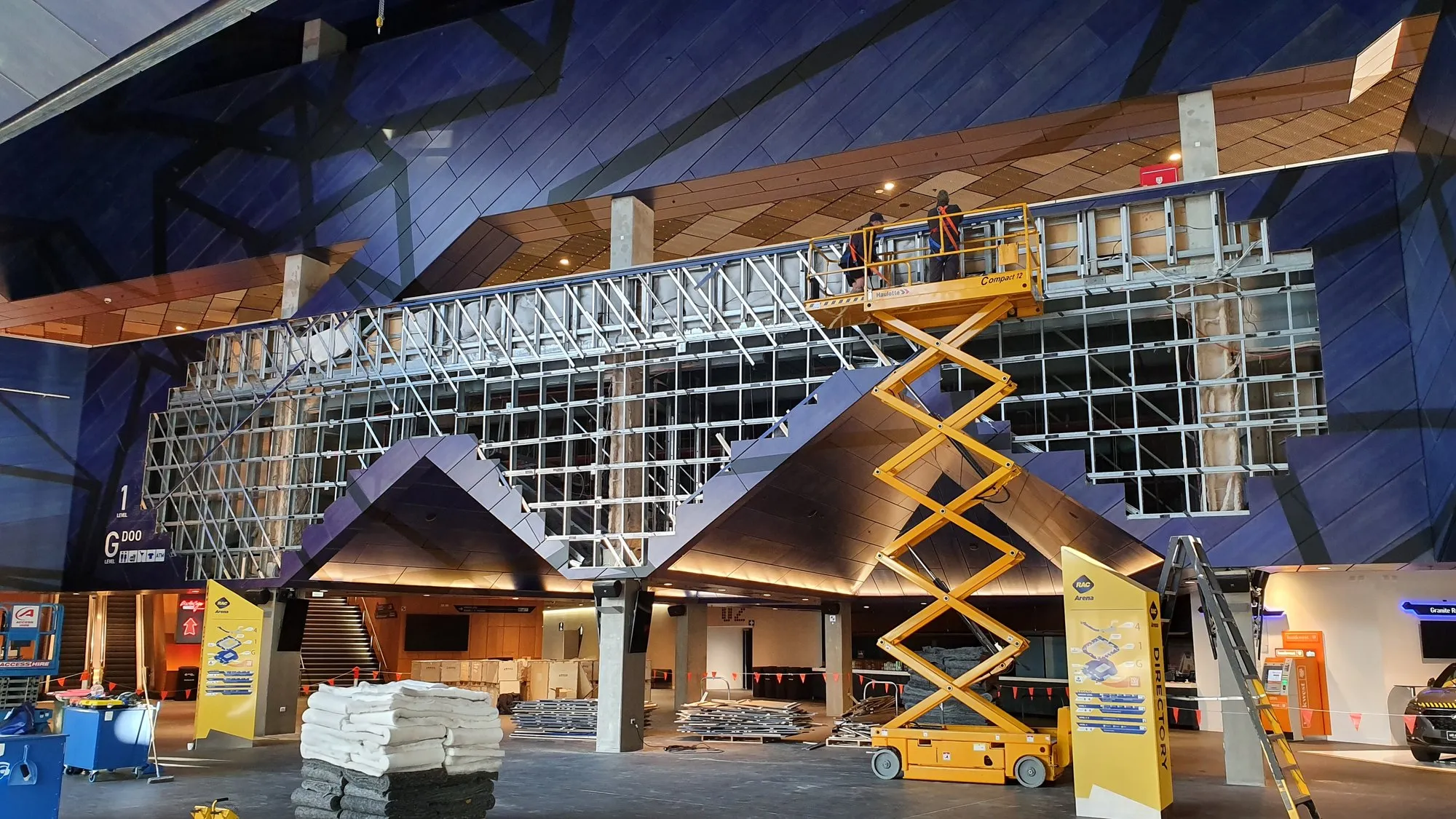
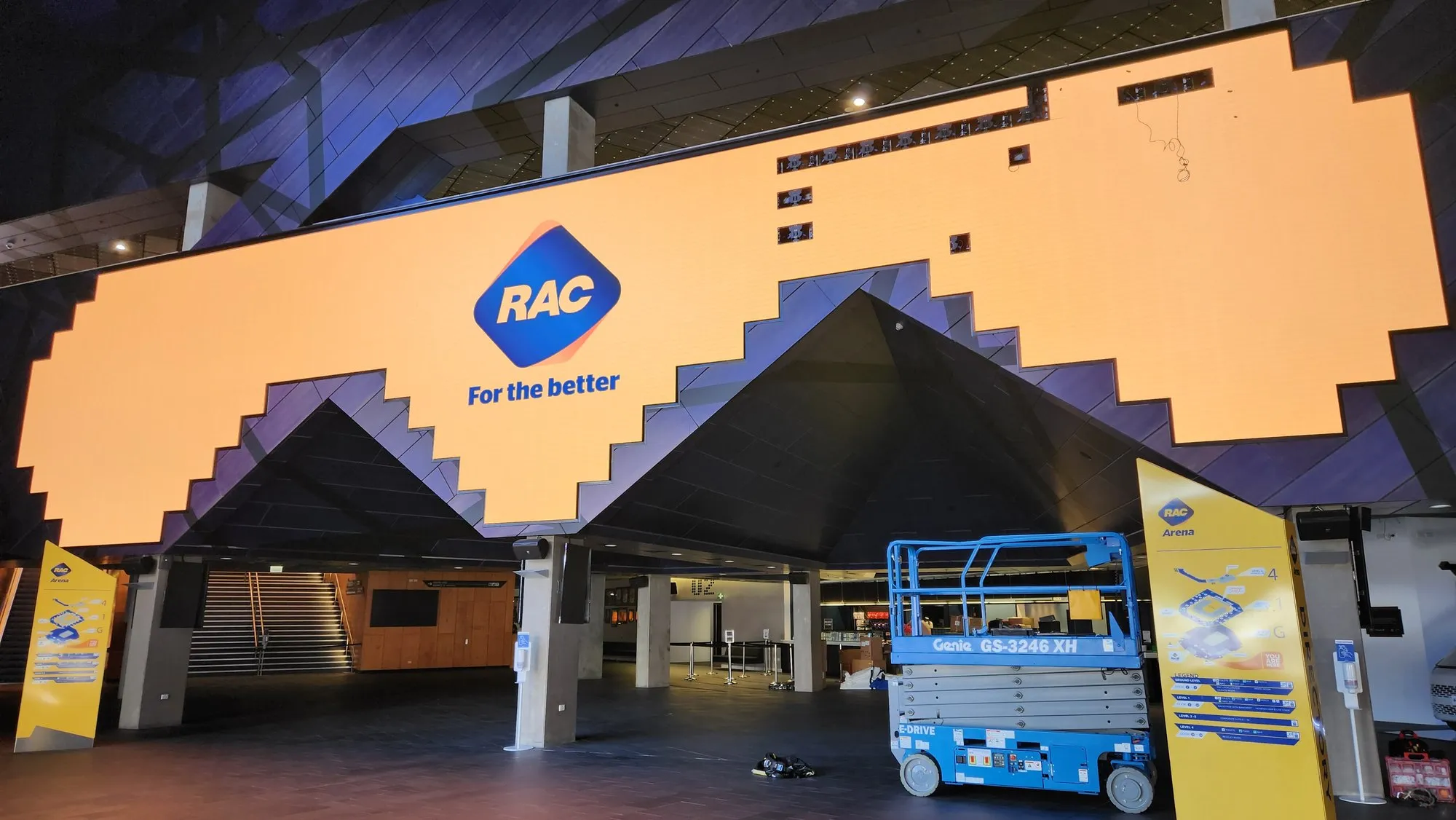
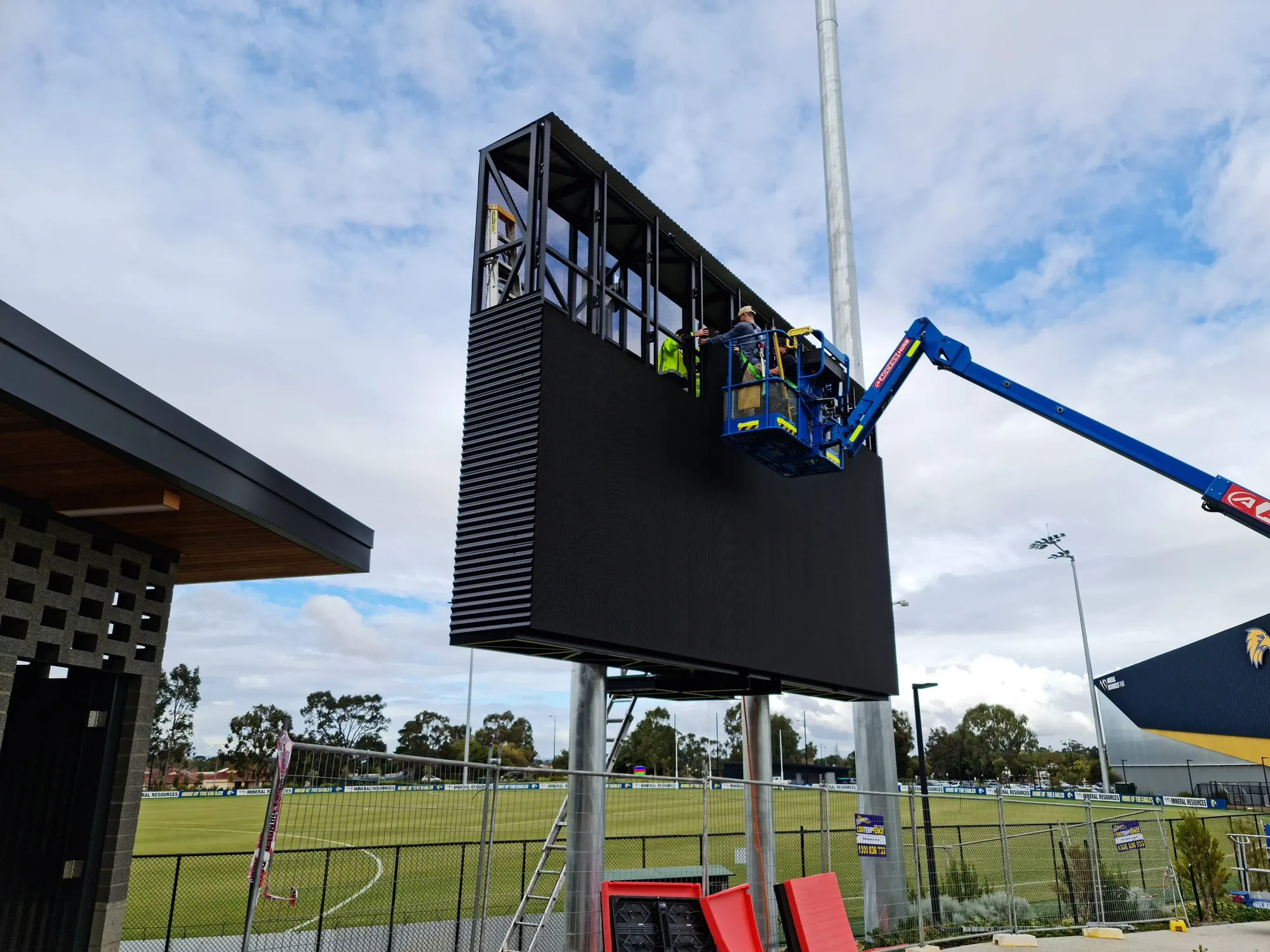
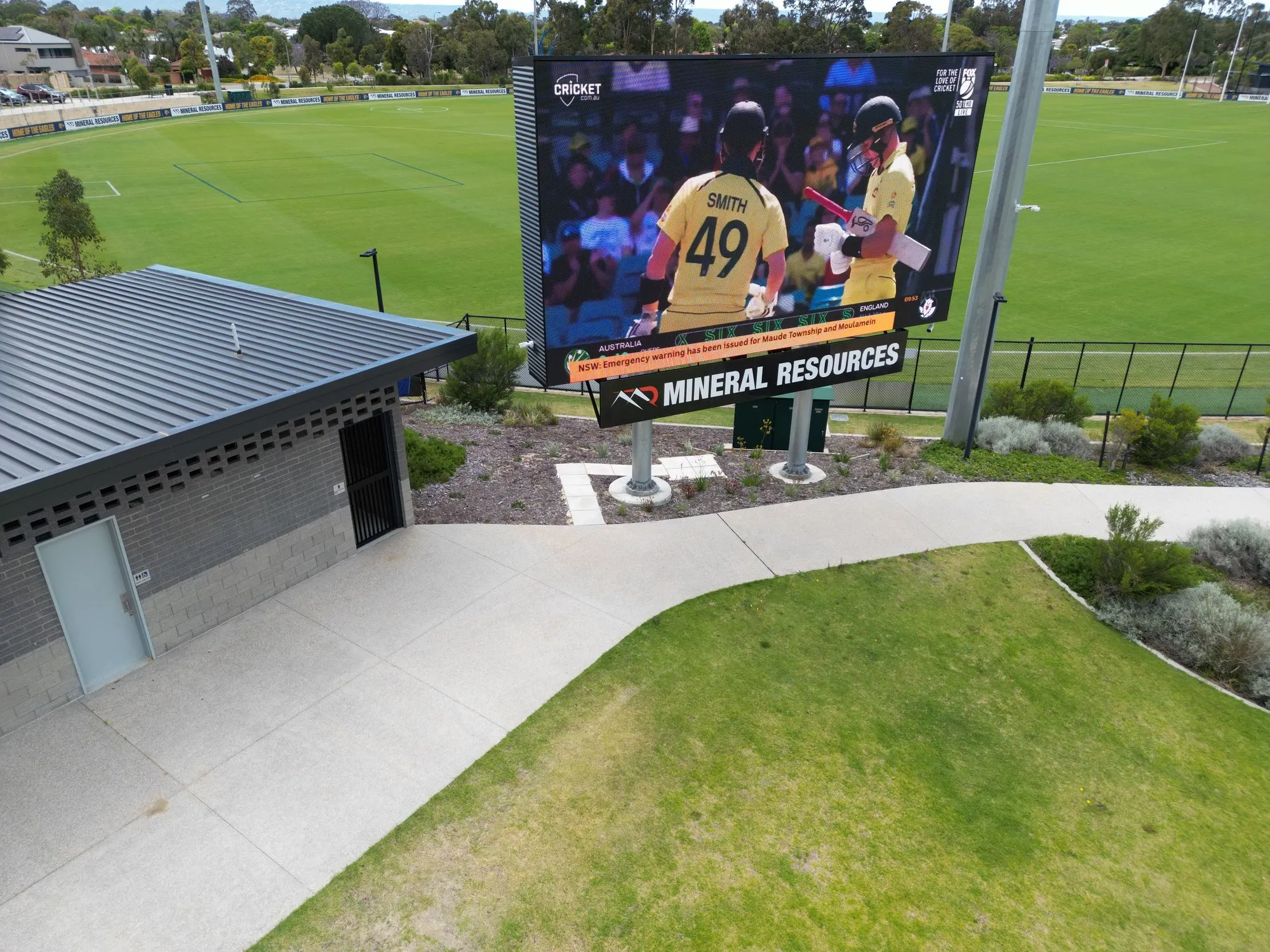
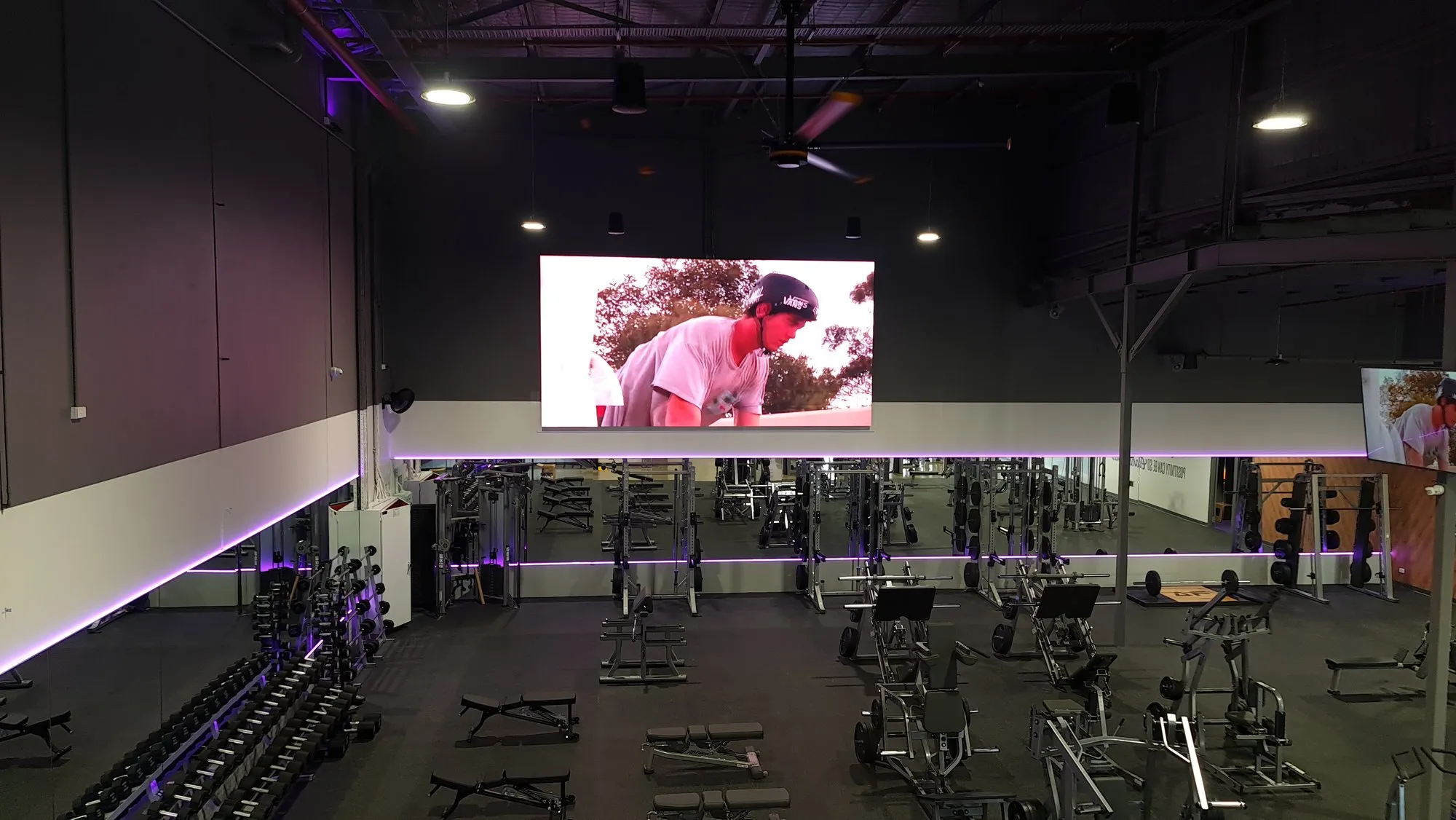
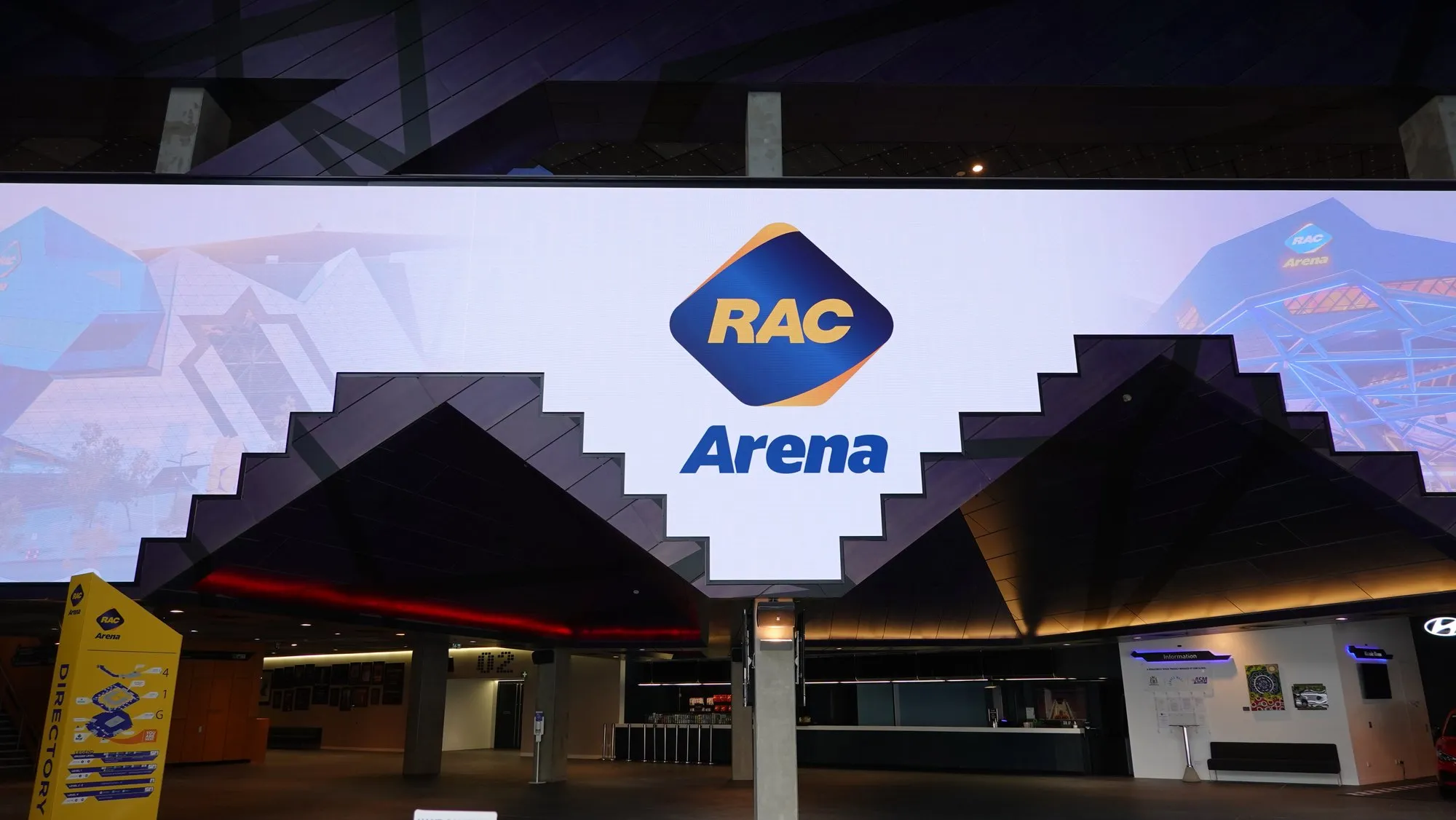
From the field LED walls we built, mid-build and finished.
Our own photographs from Perth sites — cabinets on the floor, lifts in position, and the same screens lit.
Budgeting
What a big LED screen costs in Perth.
Square metres multiplied by pixel pitch is the dominant cost lever — the rest is structure, processing and access. The ranges below are indicative only and every screen is engineered to its site, so treat them as orientation, never as quotes.
| Project type | Indicative installed range | What moves the number |
|---|---|---|
| Indoor fine-pitch wall (~3–4m wide) | $50,000–$130,000 | Pixel pitch, processing, flush architectural framing |
| Shopfront & window LED | $15,000–$60,000 | Brightness grade, size, transparent vs solid panels |
| Outdoor scoreboard (club & school scale) | $30,000–$90,000 | Size, pitch, structure and footings |
| Large outdoor & advertising LED | $100,000+ | Square metres, wind engineering, height and access |
Every figure above is indicative — site conditions change everything, and we quote after measuring the space: one number covering panels, structure, processing, installation and commissioning. Scoreboard budgets get their own treatment on our LED scoreboards page, and panel ranges we trust — like Absen — are in our product library with the reasoning attached.
LED at every scale, delivered.
What we deliver
Indoors, outdoors, any scale.
Indoor LED walls
Seamless walls for lobbies, boardrooms and auditoriums — fine pitch, flush trims and content that fits the canvas.
Outdoor & advertising LED
High-brightness, weather-rated screens for facades, windows and pylons — engineered for WA sun and wind.
Video walls & processors
LCD and LED video walls with the processing to drive them — multi-source, multi-window, broadcast-clean.
Structural & electrical coordination
Engineering, footings, rigging and power coordinated as part of the job — the screen arrives on a wall that's ready for it.
Content & control
Signage CMS or show control feeding the wall, sized to its exact resolution — no stretched logos, ever.
Service & panel care
Spares strategy, panel repairs and preventative checks that keep every pixel in service.
Trusted at scale
The arena standard, at every size.
- RAC Arena LED
- Transparent & window LED
- Flexible & curved LED
- Fine-pitch boardroom walls
- Advertising screens
- Stadium & scoreboard LED
Proof
Delivered. Documented.
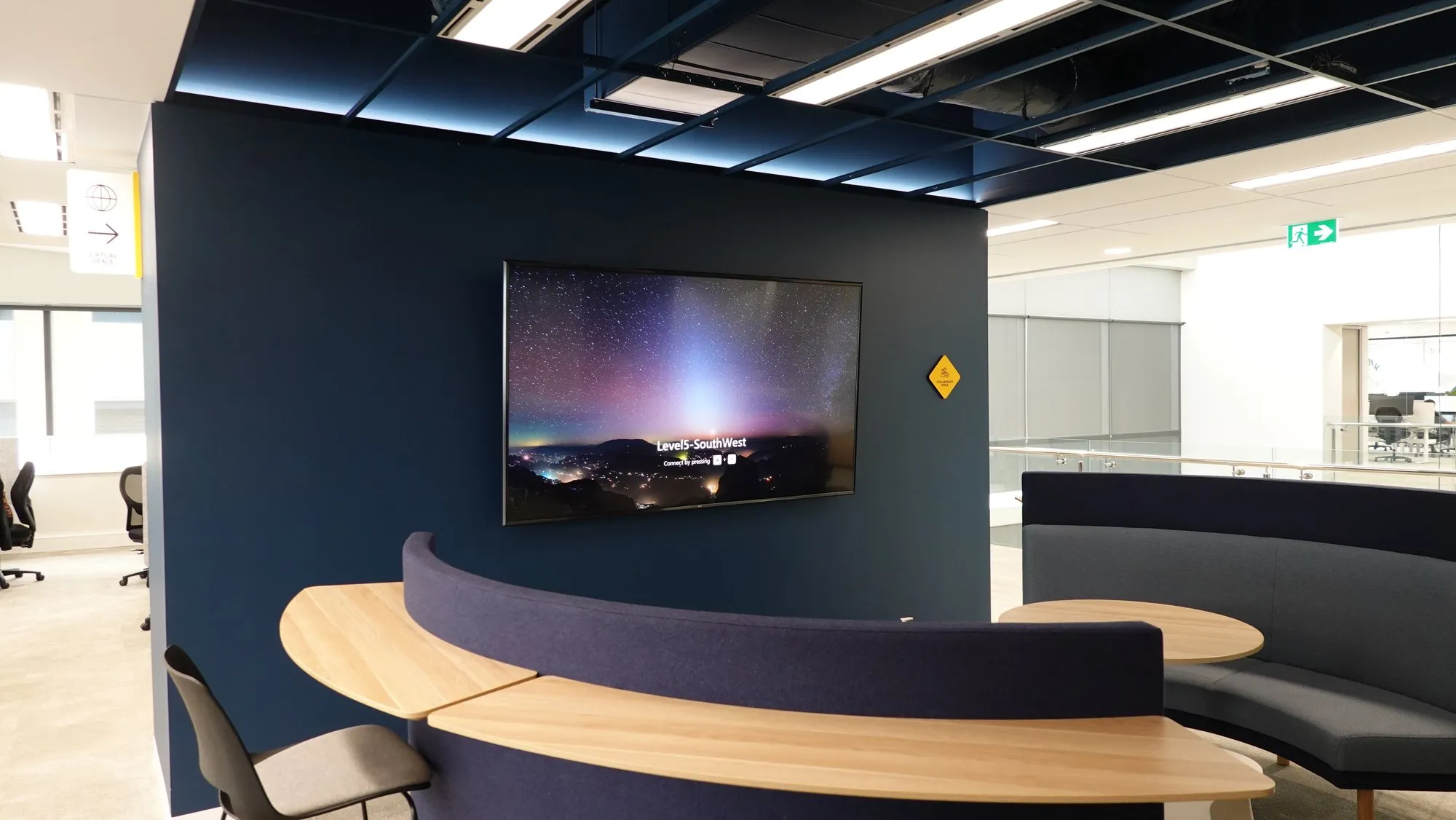
The whole room
One design. One schedule. One accountable partner.
Straight answers.
What pixel pitch do I need?
Rule of thumb: minimum comfortable viewing distance in metres roughly equals the pitch in millimetres — a 2.5mm wall suits viewers from about 2.5m. We'll measure your real viewing distances and spec the coarsest pitch that still looks perfect, because finer pitch than you need is money spent on pixels nobody can see.
Indoor vs outdoor LED — what actually changes?
Brightness (outdoor needs 4,000+ nits against Perth sun vs under 1,000 indoors), weatherproofing (IP65-rated panels and cabinets), and structure (wind loading and certified engineering). Outdoor is a different product category, not a brighter indoor panel.
How long does LED last?
Quality panels are rated around 100,000 hours to half brightness — a decade of heavy use. The real longevity story is serviceability: front-serviceable modules, a sensible spares kit and a partner who still answers the phone in year seven.
Can you replace just the screen and keep our structure?
Often, yes — existing steel and power can carry a new generation of panels if the engineering checks out. We'll assess it honestly before quoting either path.
How much does a big LED screen cost in Perth?
As orientation only: indoor corporate LED walls typically land between $50,000 and $130,000 installed, shopfront LED from around $15,000, club-scale outdoor scoreboards $30,000 to $90,000, and large advertising screens run into six figures. Square metres multiplied by pixel pitch is the dominant lever. Every screen is engineered to its site, so treat these as indicative ranges, never quotes.
Do you hire LED screens in Perth?
No — we design, install and support permanent LED screens; event hire is a staging business and we'll happily say so. If you're hiring for an event, check the pixel pitch against your closest viewer, the brightness against afternoon sun, and whether certified rigging and a technician are included. If the hire quotes keep coming back every year, owning usually wins the maths — that's where we come in.
What's the difference between an LED sign and an LED screen?
An LED sign usually means a fixed-message or simple text display — the scrolling numbers outside a pharmacy. An LED screen is a full-video display built from modules, able to show anything at almost any size. Most Perth businesses searching for LED signs actually want a small LED screen: full colour, updated remotely, running scheduled content the same way digital signage does.
Can an LED screen go in a shopfront window?
Yes — window-facing LED is one of the fastest-growing formats in Perth retail. Options include high-brightness panels just behind the glass and transparent LED mesh that keeps the window see-through while carrying content. Brightness is the deciding spec: the screen has to beat reflected street sunlight, which means thousands of nits, not hundreds.
LED or LCD for a video wall?
LED for scale, brightness and an uninterrupted image; LCD for the cheapest sharp pixels at close range. If viewers stand within a couple of metres reading fine detail — control rooms, dashboards — a thin-bezel LCD wall still earns its place. For foyers, venues and anything over about three metres wide, direct-view LED has largely won the argument.
Thinking big? Let's measure the wall.
Bring the space and the ambition — we'll bring the pitch chart, the engineering and a number that includes everything.