Large Venues
Every seat, every time.
Auditoriums, arenas, function centres, churches — spaces where a thousand people judge the system at once. Focus AV designs venue AV that reaches the back row without deafening the front.
Venue scale, proven
Fifteen thousand people notice everything.
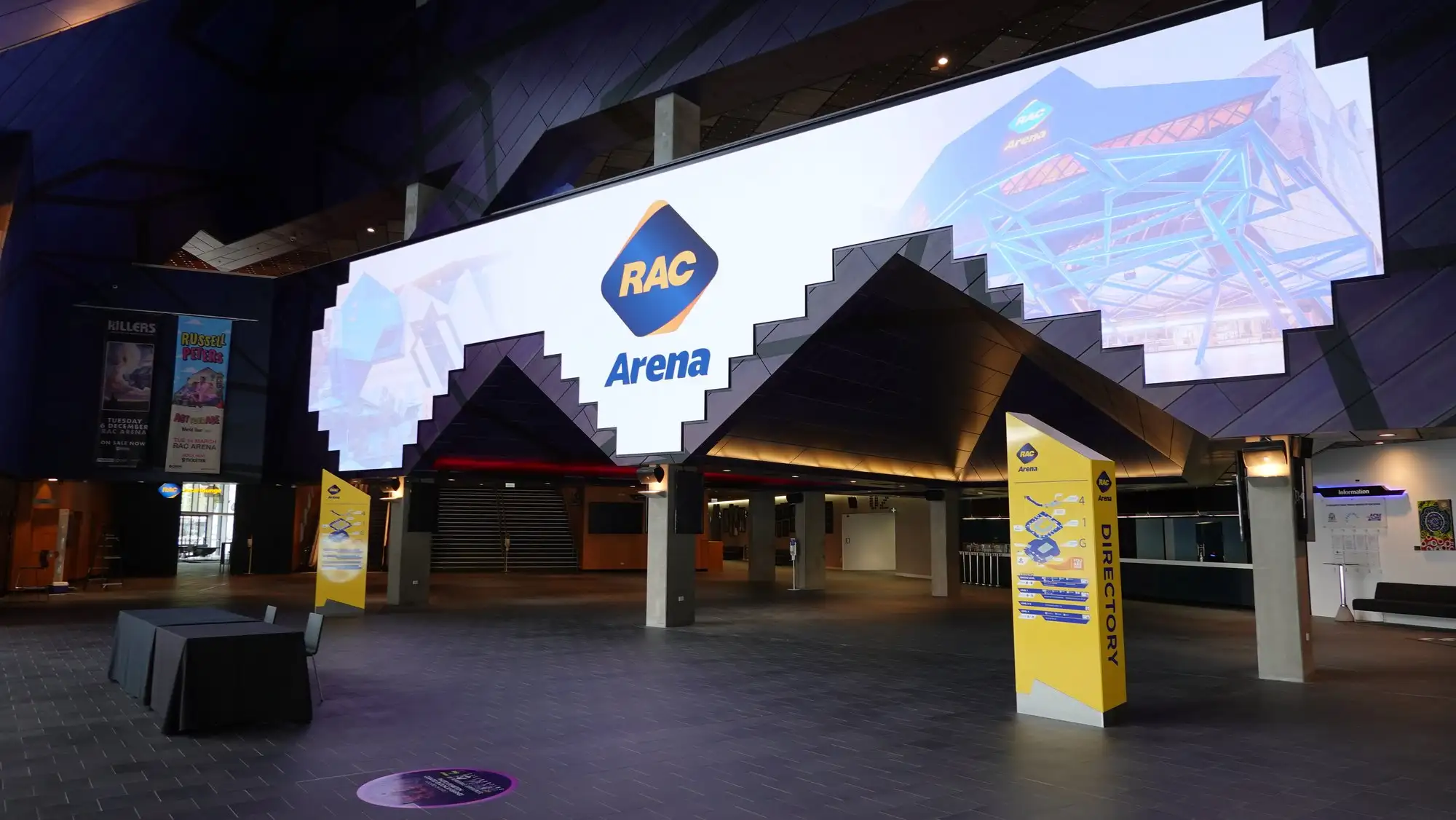
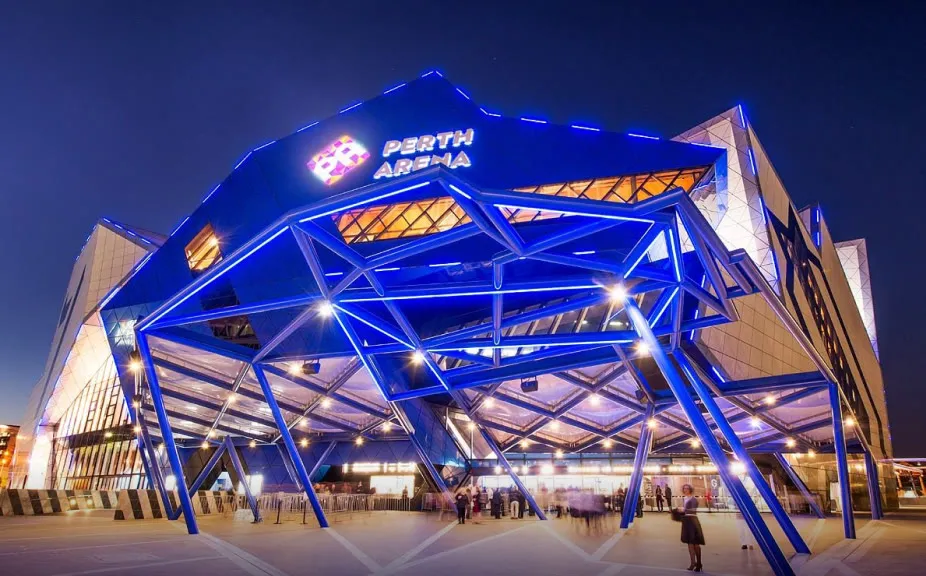
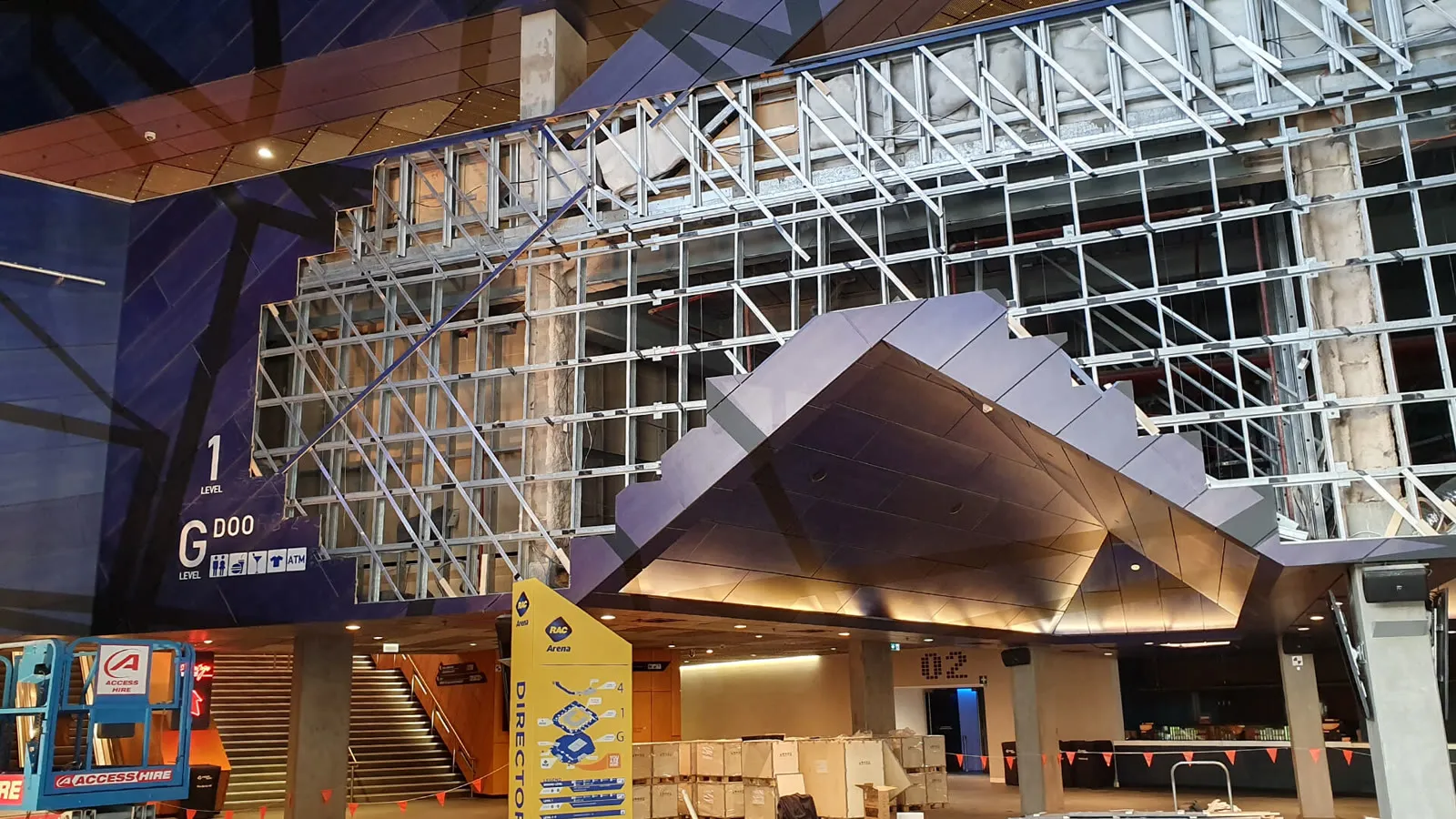
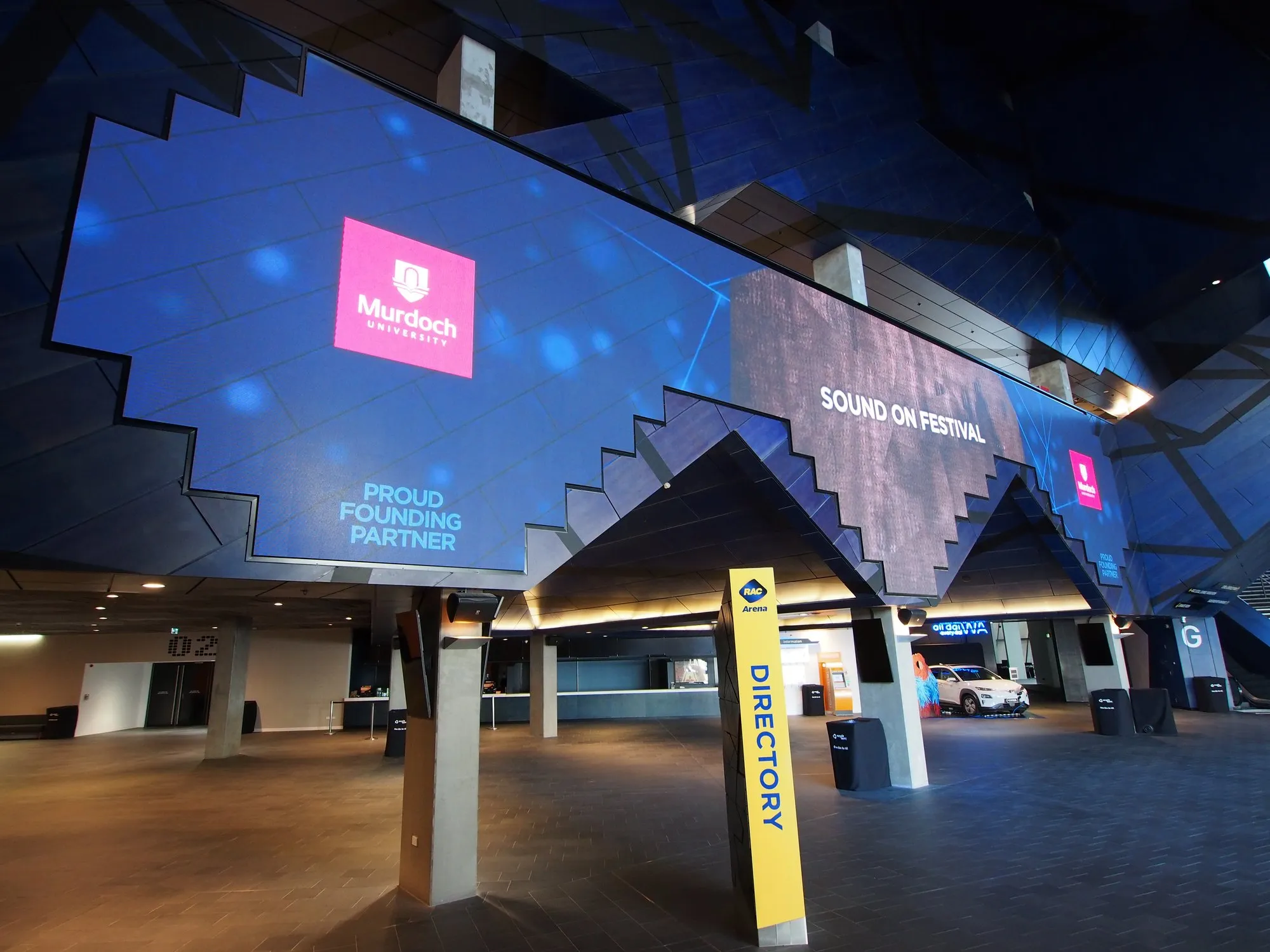
RAC Arena's glowing lattice is Focus AV's work — LED engineered across one of the most recognisable buildings in Perth. Venue projects live at this scale: every decision is multiplied by thousands of seats, hundreds of metres of cable, and zero tolerance for opening night going wrong.
Venue AV is a systems discipline. Audio that reaches the back row without deafening the front. Screens readable from every angle of the bowl. Paging and evacuation integration the certifier signs off. Control that one operator can run on event night.
From arenas to convention spaces, function centres and campus venues, Focus AV designs, engineers and installs the whole stack — and stays for the events that matter.
Anatomy of a venue system
Four systems, one event.
Auto-cycles every two seconds. Tap a part to jump to it.
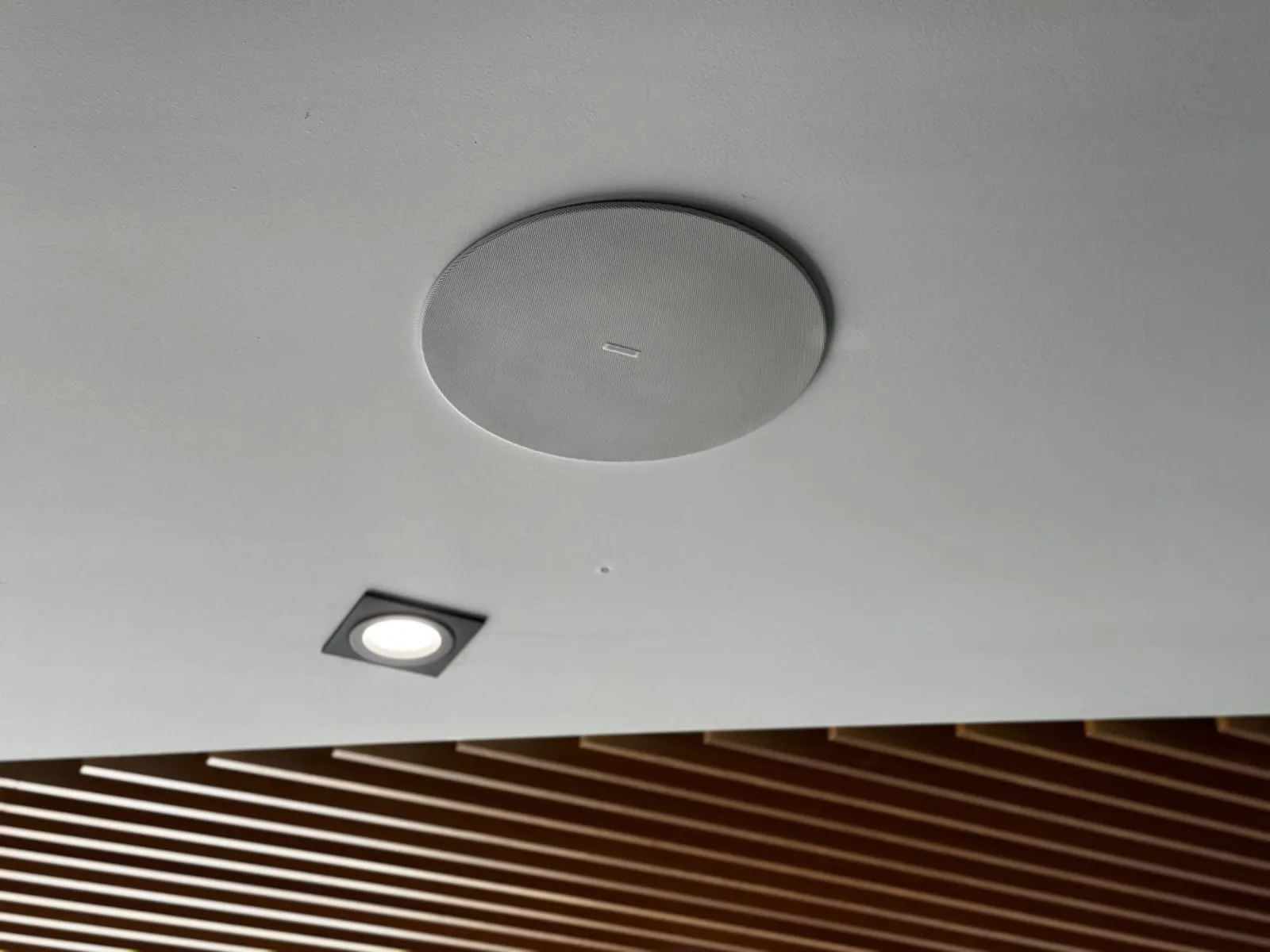
 The whole room
 Scale changes everything
Big rooms break small-room thinking.
Venue AV is a different physics problem: speech intelligibility across fifty metres, sight-lines past balconies, operators who might be volunteers, and event turnarounds measured in minutes. Meeting-room logic simply doesn't scale to it.
It takes coverage modelling before a speaker is hung, screens sized to real viewing distances, control simple enough for the Saturday crew, and infrastructure planned for the events you'll host in five years — not just Friday's booking.
From RAC Arena's LED to school auditoriums and places of worship, Focus AV designs venue systems as one integrated whole: audio, vision, IPTV, signage and control that a small team can run confidently.
Venue-wide audio
One venue, many rooms.
Venue audio is a zoning problem before it's a loudspeaker problem: the main room, foyer, function spaces, bars, corridors and outdoor areas each need their own source, level and behaviour, all answering to one operator. Get the zoning right and the building feels effortless; get it wrong and every space fights its neighbour.
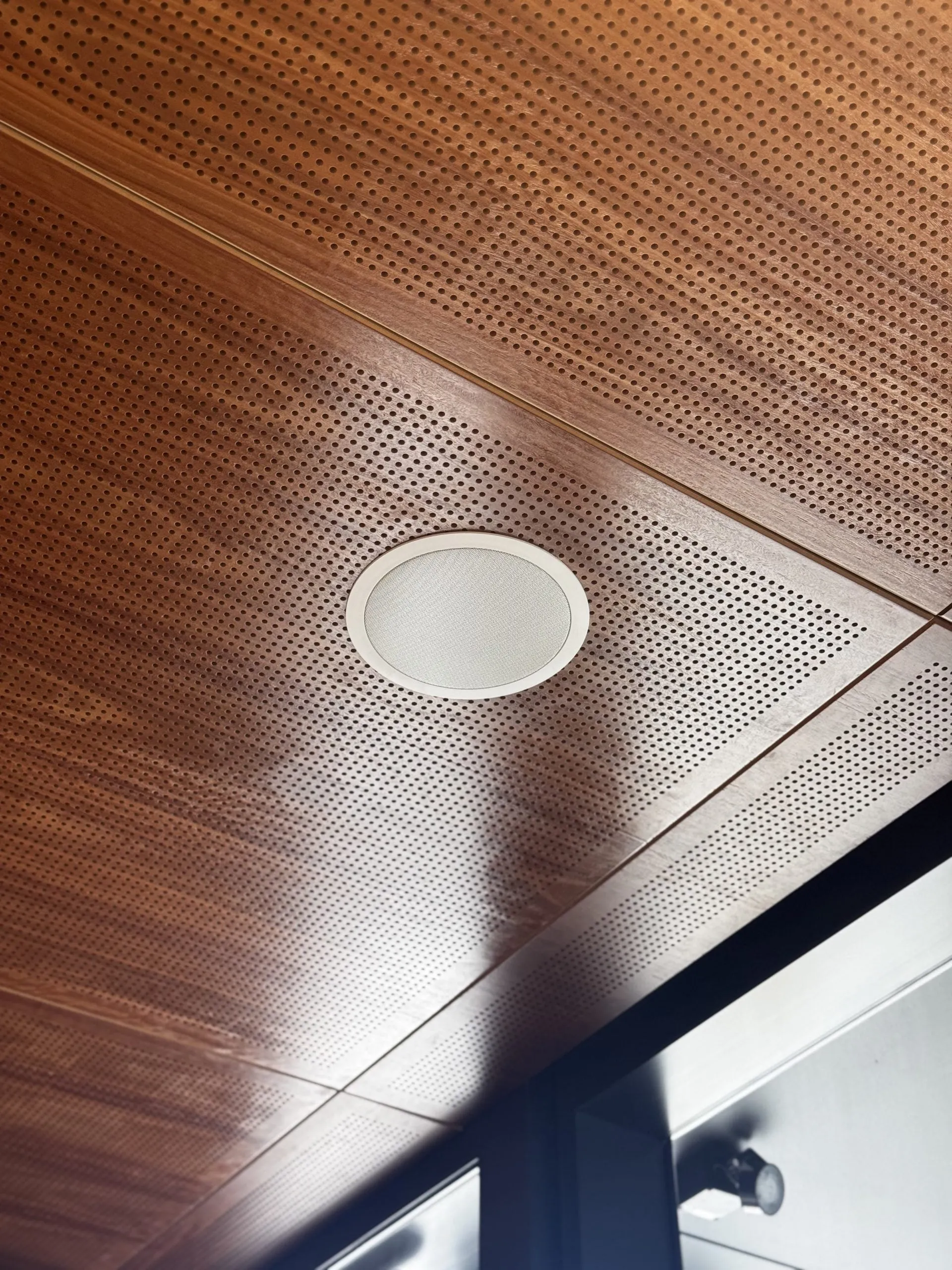
The main room
Line arrays, distributed fills and delay rings modelled to the room's actual acoustics — even level and clear speech from front row to back balcony, for a concert on Friday and a conference on Monday.
Foyer & concourse
Pre-show music, sponsor audio and clear announcements at conversation-friendly levels — the zone that shapes first impressions and moves crowds without shouting at them.
Function & breakout rooms
Independent when hired separately, combined when the wall folds back — room-combining logic reroutes sources and levels automatically, so staff never touch a patch panel.
Paging & announcements
Zone-selectable paging that ducks the program audio, reaches exactly the areas intended, and is designed alongside the building's emergency systems so the certifier's sign-off is straightforward.
Back-of-house & outdoor
Show relay to dressing rooms, calls to the loading dock, weather-rated audio for courtyards and queues — the unglamorous zones that make a venue actually run on event night.
DSP: the brain
A networked audio processor holds every zone, level, schedule and priority rule — tuned at commissioning, adjustable remotely, and the reason one operator can run a building this size.
Vision distribution
Any source, any screen.
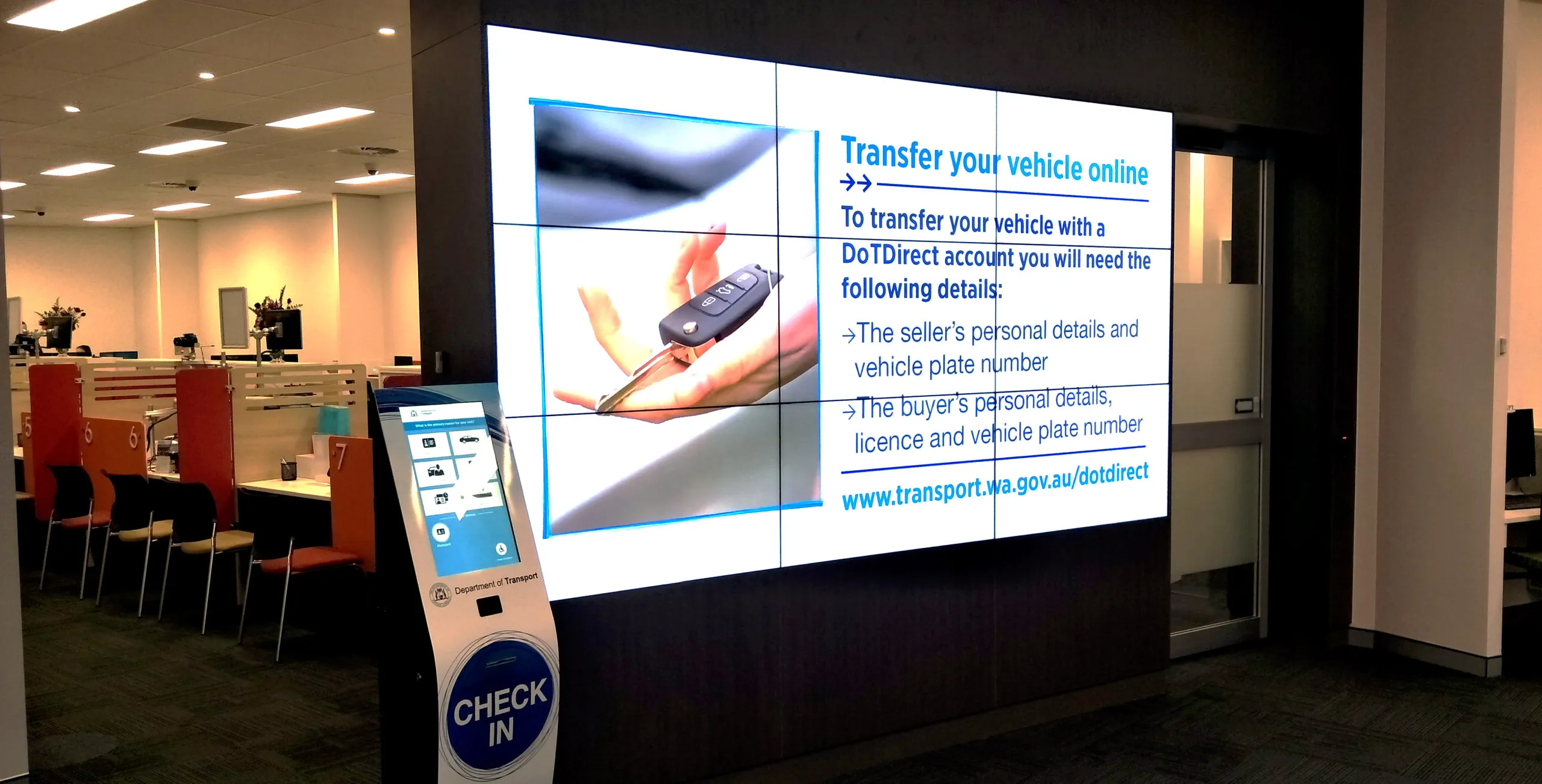
Vision distribution puts the right pictures on every display in the building from one point of control: the main feed in the bowl, sponsors on the concourse, wayfinding in the foyer, the overflow room carrying the keynote. It runs over the venue's network, which is what makes a hundred screens manageable — and expandable.
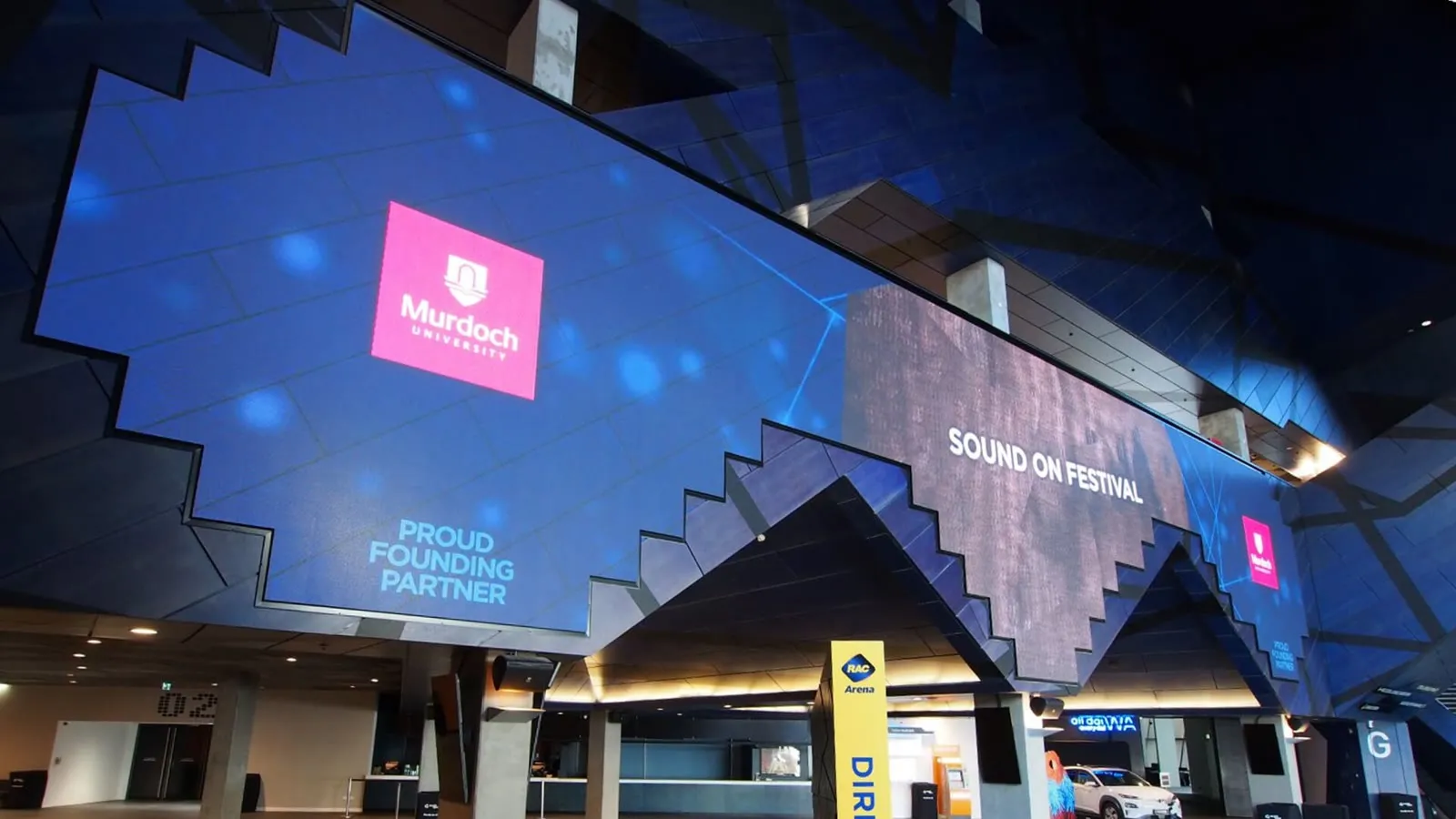
Big-format LED & projection
Arena screens, video walls and architectural LED engineered into the structure and sized to genuine sight-lines. Focus AV's screen on RAC Arena's lattice facade is the public face of this work — see also our big LED screens service.
IPTV to every room
Live television, in-house channels and event feeds delivered to corporate suites, bars and back-of-house over the network — one head-end, hundreds of endpoints. Our IPTV practice covers the platform detail.
Digital signage & wayfinding
Scheduled content that changes with the calendar: today's event at the door, menus above the bar, sponsors on rotation, directions that update when the room layout does — managed centrally through our digital signage platforms.
Overflow & relay
When the main room sells out, the keynote follows the crowd — full audio and vision relayed to foyers, function rooms and outdoor screens, so a capacity crowd becomes a bigger event instead of a turned-away one.
Where this work lives
Six kinds of big room. One discipline.
The physics of a large space doesn't care what the building is called — an arena, an auditorium, a cathedral and a convention hall all pose the same core problems of coverage, sight-lines and control. What changes is the events calendar, the operators and the tolerance for visible technology, and that's where each venue type gets its own design answer.
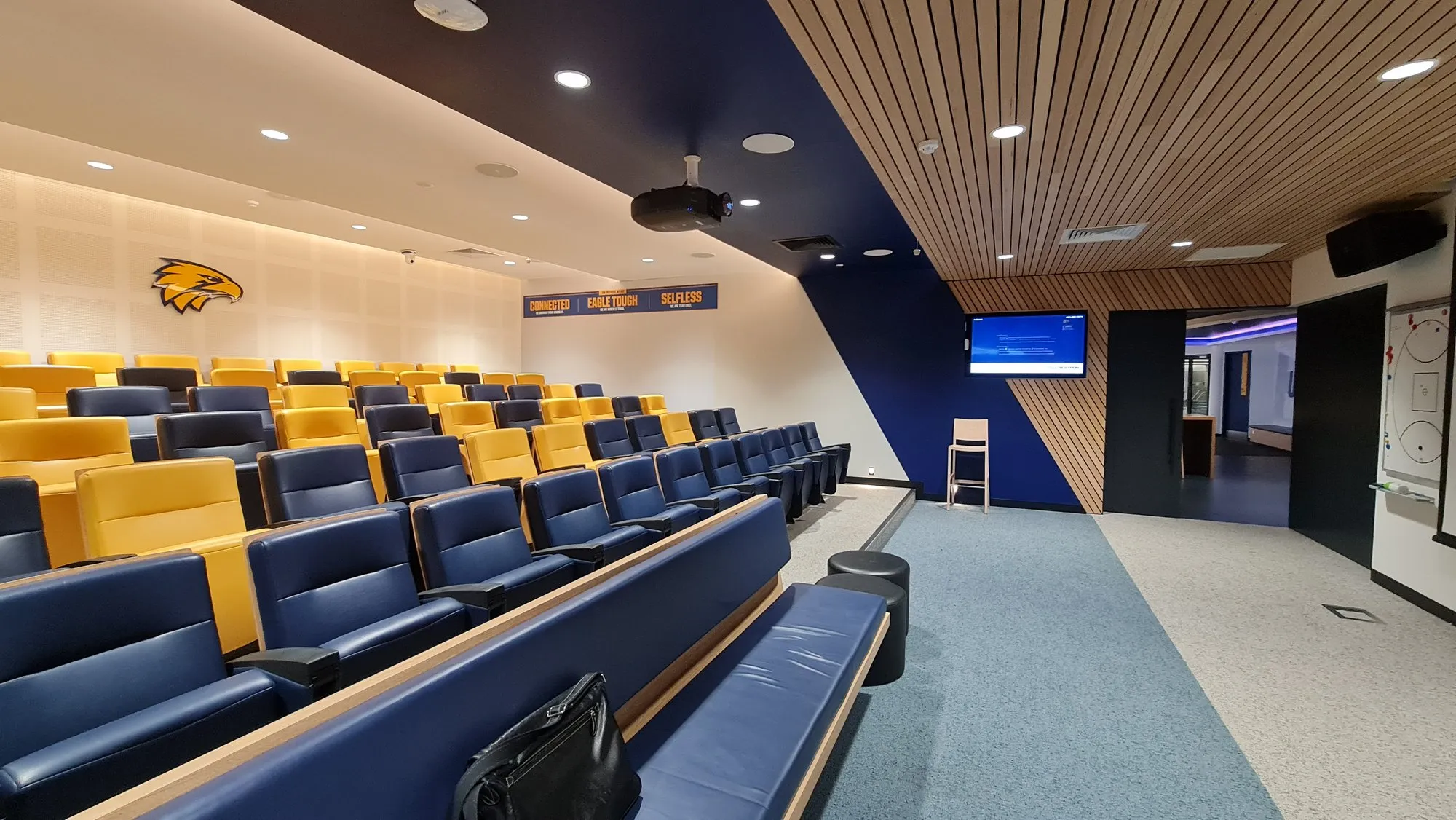
Arenas & stadia
Bowl-scale audio, giant LED and show control with redundancy at every layer — delivered around a relentless events calendar, as we did on RAC Arena.
Auditoriums & performing arts
Theatre-grade audio and vision that serve a school production on Tuesday and a touring act on Friday — with acoustics treated as part of the design, not an apology after it.
Function & convention centres
Divisible rooms, room-combining logic and per-space control so three simultaneous hirers each believe the building was built for them — and staff reset it in minutes, not hours.
Places of worship
Clear speech in acoustically difficult architecture, discreet equipment in sensitive interiors, and control a volunteer roster can run every week of the year without a technician on call.
School halls & campus venues
Assembly on Monday, exams on Wednesday, the musical in week ten — preset-driven systems that any staff member can drive, built to survive a decade of student use.
Museums & civic buildings
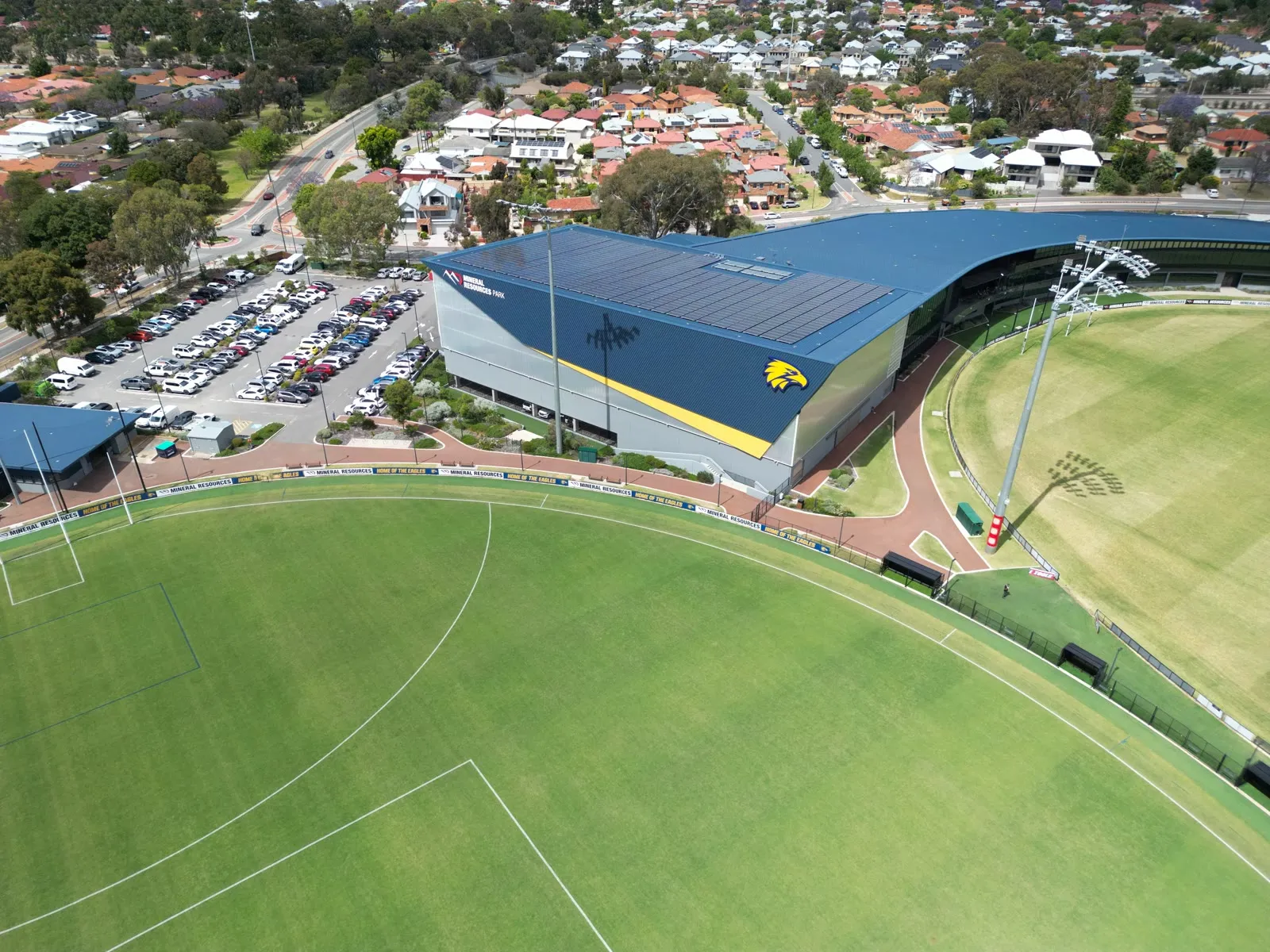
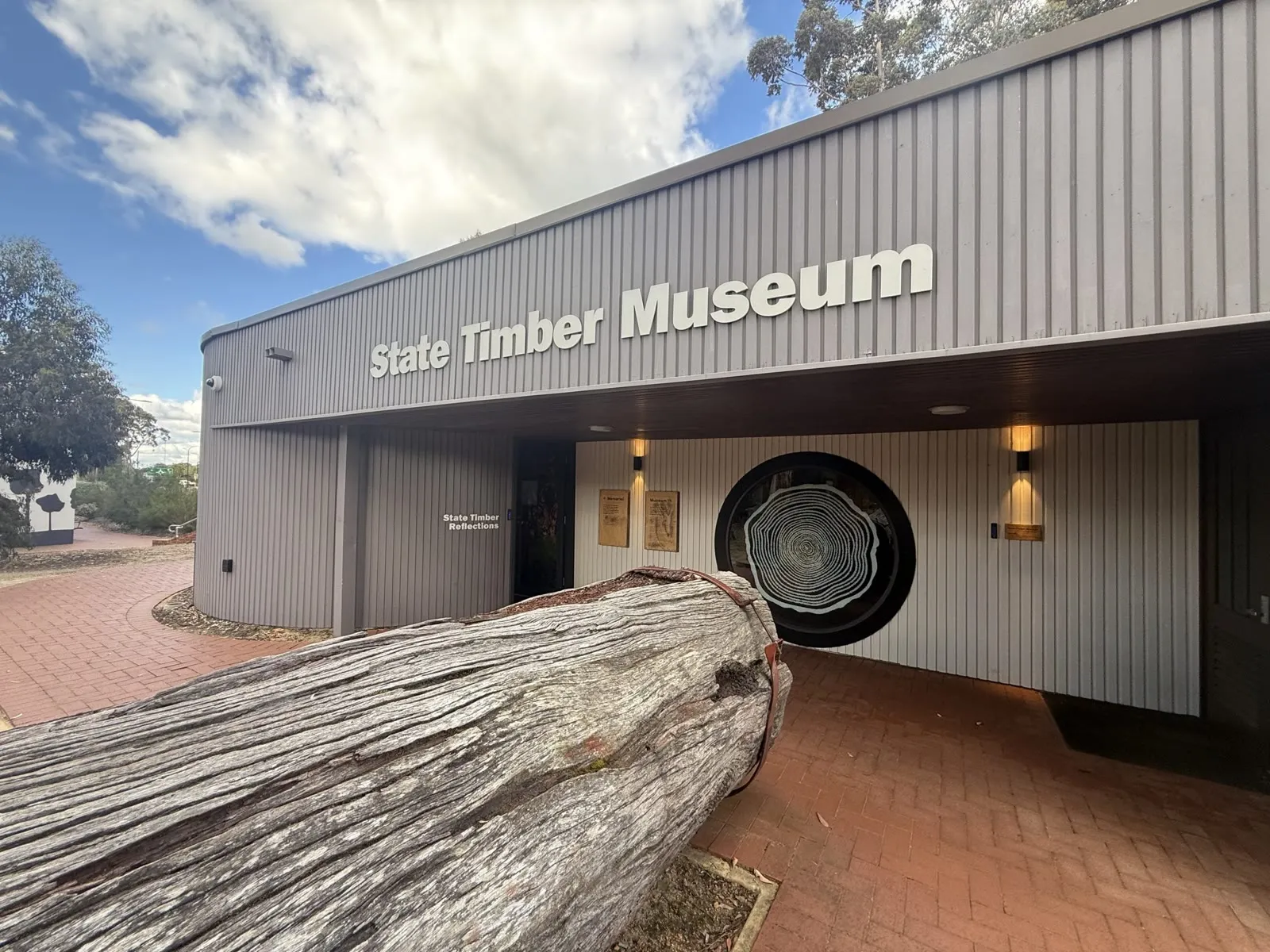
Exhibition audio, interpretation screens and events capability threaded through heritage fabric — the State Timber Museum shows the approach at its most sensitive.
Intelligibility, measured
Speech you can prove, not just play.
Whether a thousand people understand the words is measurable: designers use the Speech Transmission Index (STI) to score it, and a venue's reverberation time largely decides the result. We design to those numbers, then verify them at commissioning — which is the difference between a system that's loud and one that's understood.
Reverberation: the room fights back
Hard, big rooms keep sound alive for seconds after each word, smearing the next one. Past a certain point no loudspeaker can out-shout the architecture — the room itself needs treatment, which is why our acoustic treatment work sits on the same drawing as the audio design.
Directivity: aim at ears, not walls
Modern arrays steer sound onto the audience and away from the surfaces that cause the echo in the first place. Aiming is most of the battle in a reverberant venue — it's engineering the room can't argue with, and it's decided in the model, not on the ladder.
Verification: walked and measured
Commissioning ends with measurements across the seating plan and a walk of every zone by ear. If the back corner of the balcony scores poorly, it gets fixed before handover — because that seat holds a paying audience member, not an average.
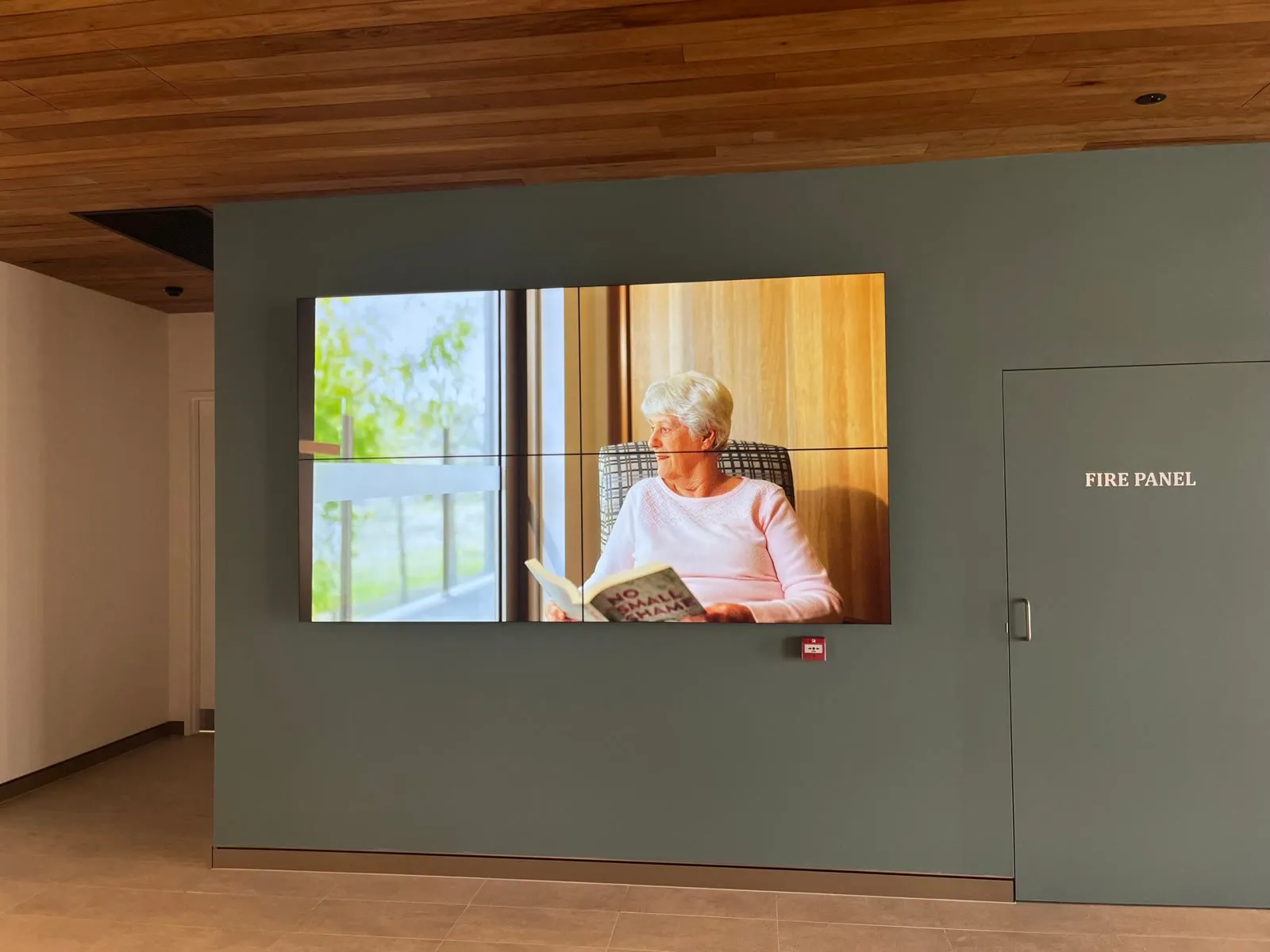
Venue control
One operator, whole building.
Control is what turns audio zones and vision distribution into a venue one person can actually run: touch panels with one-press presets per event type, a deeper layer for the trained few, and monitoring that flags a fault before the audience notices.
Presets per event
Assembly, concert, conference, service — each a single press that sets every zone, screen and level. The complexity was handled at commissioning, not on event night.
Layered access
Casual staff see four buttons; the technical manager sees everything. The same panel serves both, so a volunteer crew on Saturday can't undo Friday's tuning.
Monitoring & alerts
Amplifiers, screens and sources report their health continuously — a failing device raises a flag on Tuesday instead of a silence on Saturday.
Rooms to precincts
The same discipline scales from a single auditorium to a multi-building site — and up to the dedicated operations spaces our control room AV practice builds.
It works at heritage scale too: the State Timber Museum's AV integration runs exhibition audio, vision and interpretation from the same one-operator philosophy — proof the approach fits sensitive buildings, not just arenas.
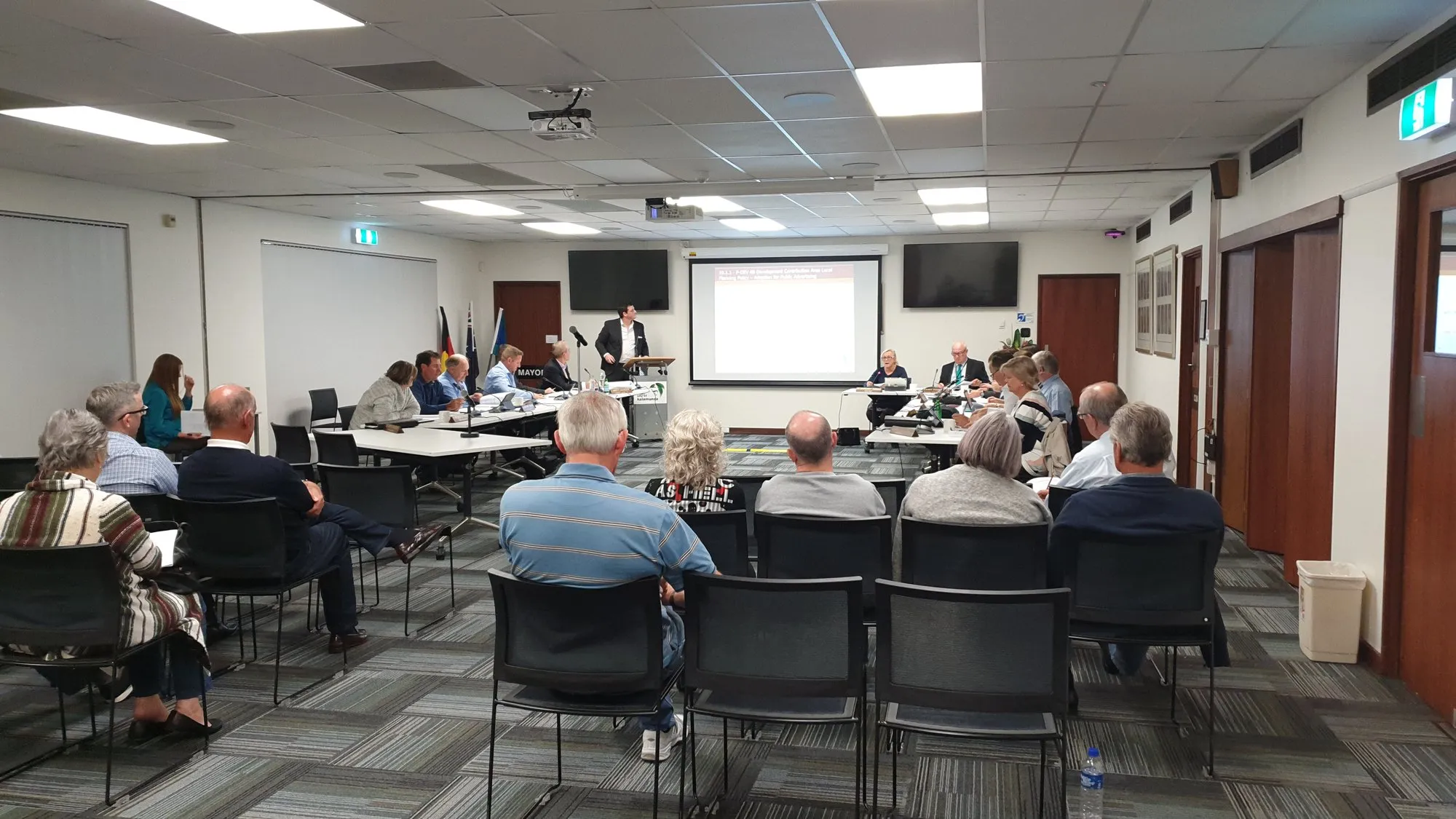 Full room, back row included — the only test that counts.
 From the field Big rooms, full of people.
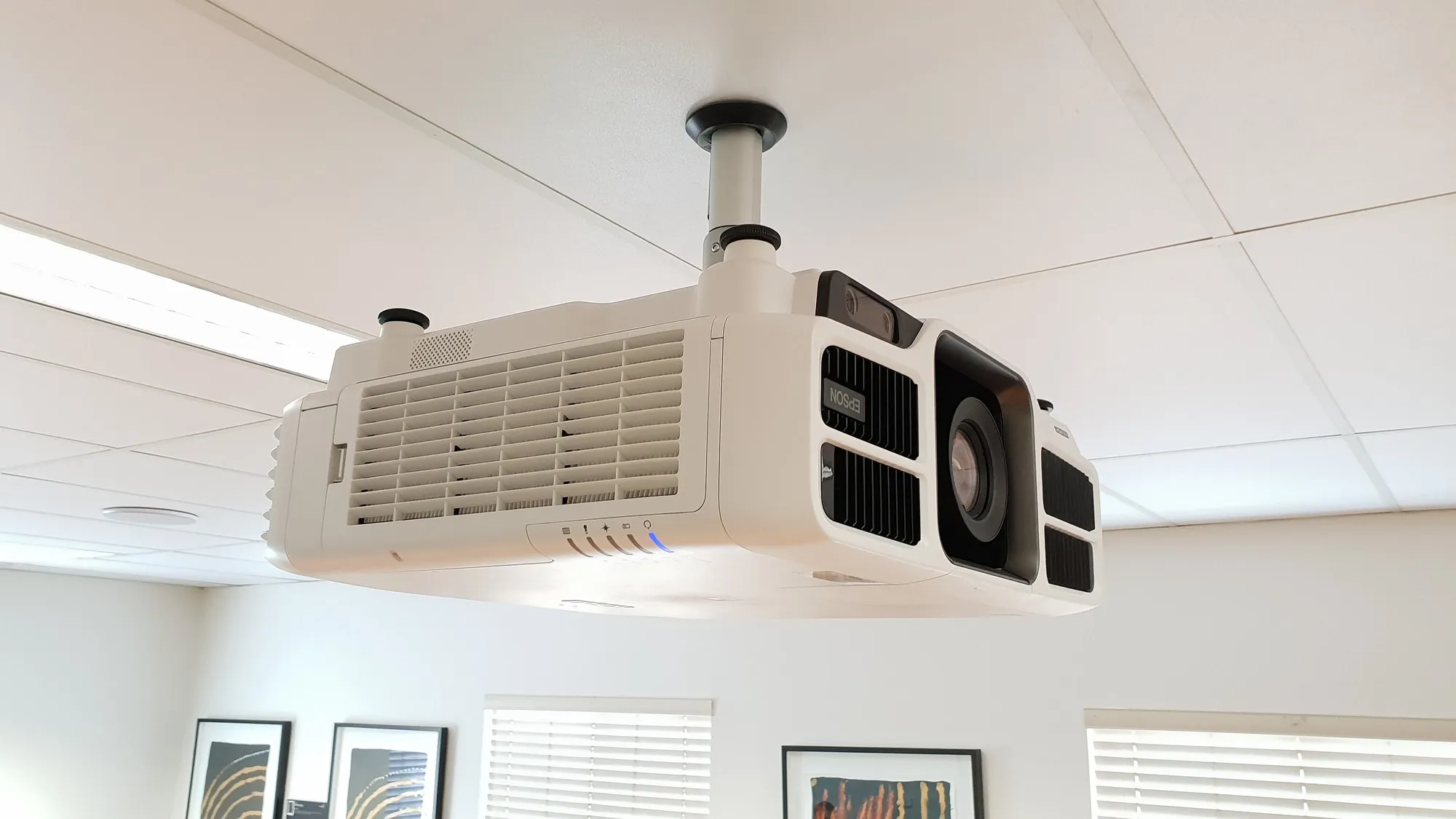
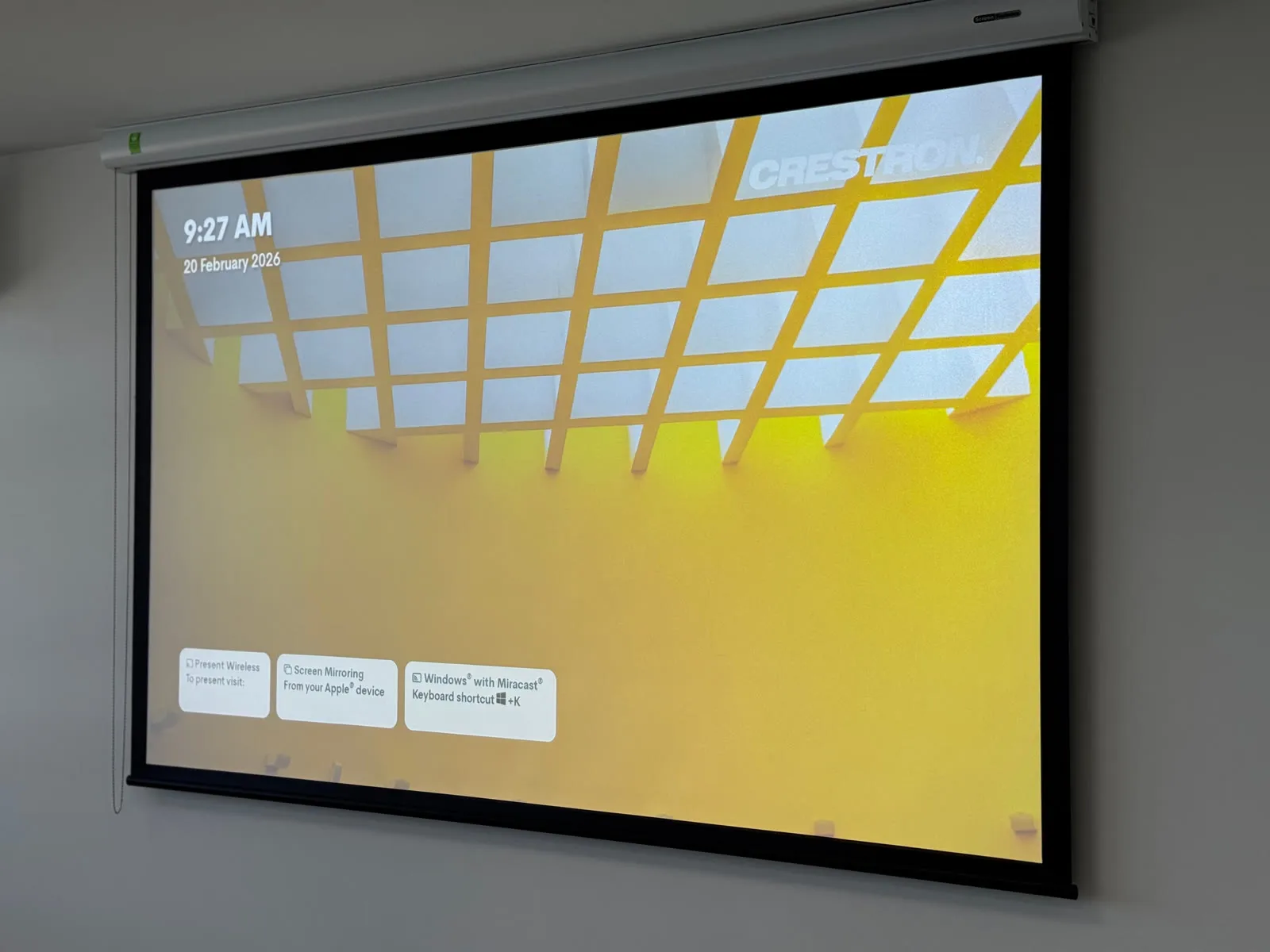
Auditoria, lecture theatres and function spaces where the back row has to hear it too.
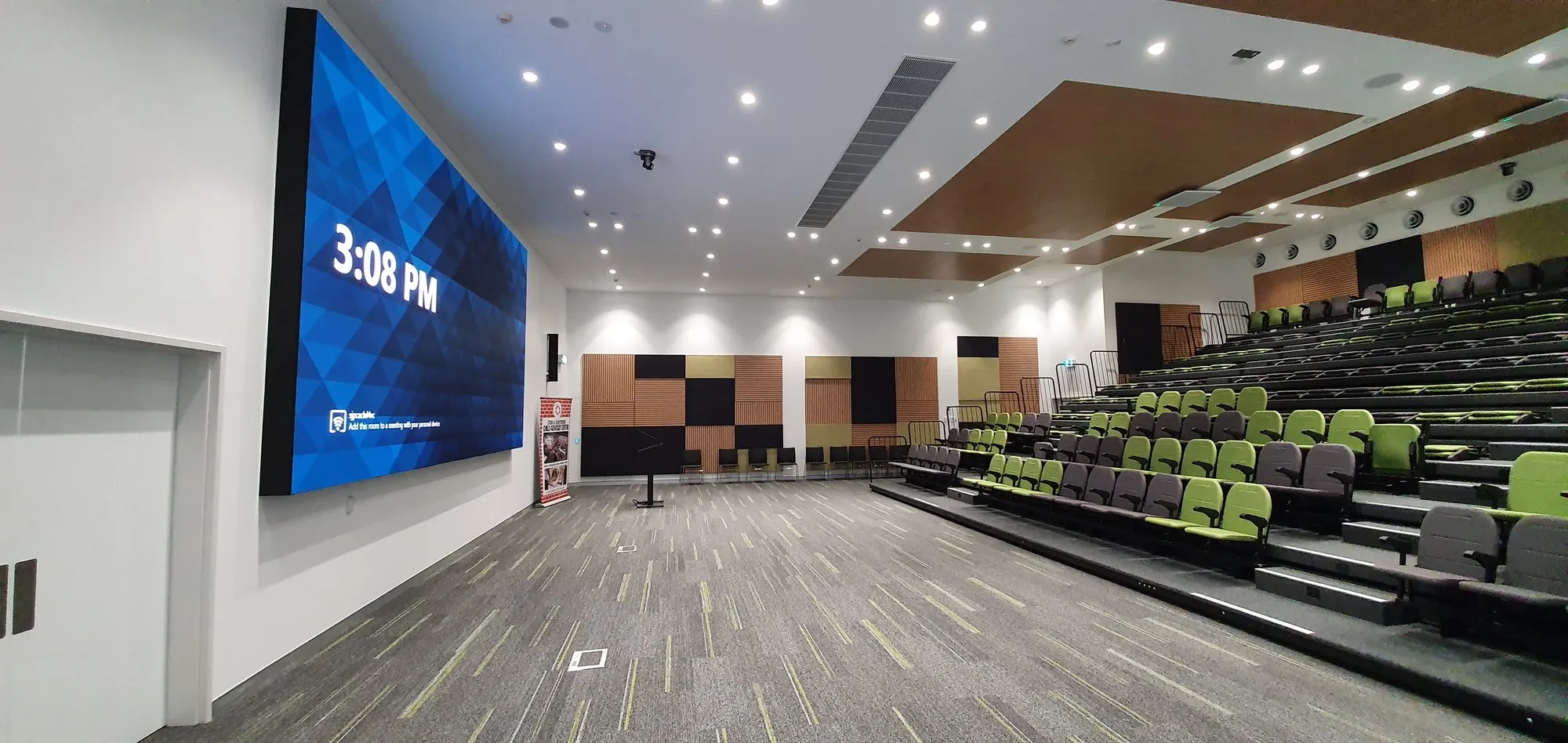
Venues like yours, delivered.
What we deliver
Venue-grade, end to end.
Audio coverage design
Modelled loudspeaker systems that deliver even, intelligible sound to every seat — with DSP that keeps it that way.
Large-format vision
LED walls, projection and relay screens sized and placed for real sight-lines, balconies included.
Show & event control
Presets for every event type — assembly, concert, conference, service — one touch each, volunteer-proof.
Venue-wide distribution
IPTV, signage and overflow feeds to foyers, corporate suites and back-of-house.
Stage & production
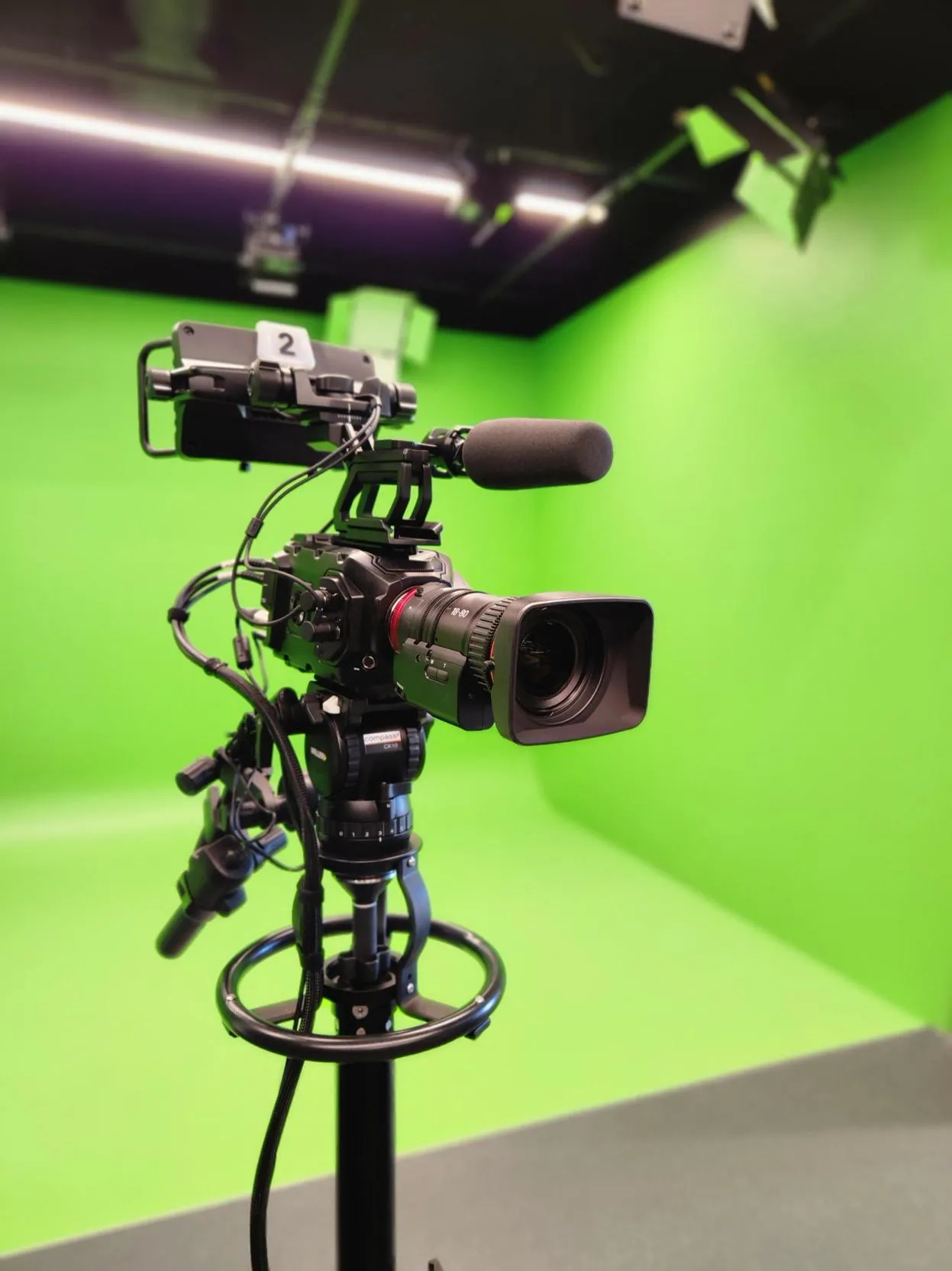
Radio microphones, foldback, lecterns and broadcast feeds for venues that perform.
Staged upgrades
Live-venue delivery: we stage works around your calendar so the doors never close.
Proof
Delivered. Documented.
The whole room
One design. One schedule. One accountable partner.
Straight answers.
Our venue is hard to understand speech in — fixable?
Almost always. The cause is usually coverage design and reverberation rather than 'bad speakers' — we model the space, fix the geometry and DSP, and treat acoustics where the room itself is the offender. Intelligibility is engineering, not luck.
Can volunteers really run a big system?
If it's designed for them, yes: one-touch presets per event type, locked-down complexity, and a deeper layer for the trained few. The best venue systems feel simple precisely because the complexity was handled in design.
Do you work around a live events calendar?
Standard practice — night and dark-day staging, temporary systems where needed, and cutovers planned so the next event never notices the surgery.
Can one system serve concerts, conferences and ceremonies?
That versatility is the design brief for most venues we build: flexible zoning, preset-driven configurations and infrastructure with headroom. Tell us the five events that matter most and we'll design to all of them.
How do audio zones work in a large venue?
The venue is divided into independently controlled areas — the main room, foyer, function spaces, bars, back-of-house, outdoor concourse — each with its own source, level and schedule. The show plays in the bowl while the foyer runs its own music and a page reaches only the loading dock. One system, one operator, and every space hears exactly what it should.
Can different screens show different content at the same time?
Yes — that's vision distribution. Over the venue's network, any source routes to any display: the main feed to the bowl, sponsor content to concourse screens, wayfinding to the foyer, and the overflow feed to function rooms. Scheduling handles the everyday content automatically, and an operator overrides any screen on event night.
Does venue audio integrate with paging and evacuation?
It has to. Venue audio is designed alongside the building's paging and emergency systems so announcements duck the program audio in the right zones and compliance sign-off is straightforward. We coordinate with the building services trades and the certifier so the interface is documented, tested and boring — exactly as it should be.
A venue with ambitions? Let's walk it end to end.
Bring the events calendar and the pain points — we'll bring the coverage model and a staged plan.